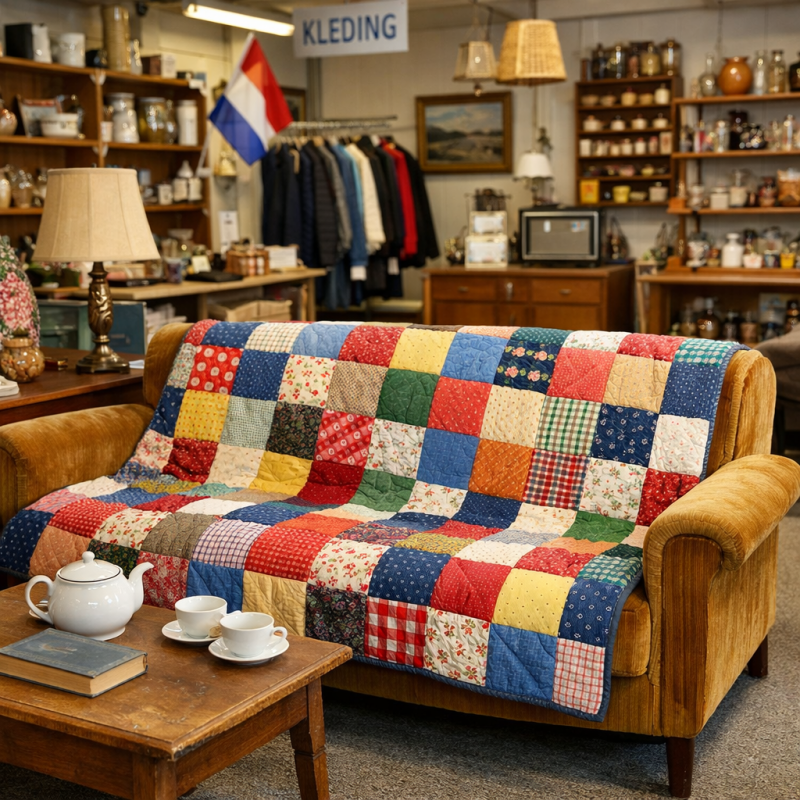
A quilt or patchwork blanket holds a special magic. It’s far more than just a piece of fabric—it’s a labor of love, a testament to time, patience, and craftsmanship. For generations, quilts were painstakingly made by hand, sometimes from leftover fabric scraps, sometimes as carefully designed patterns. This rich history often leads enthusiasts to wonder: Is it wise to buy a quilt from a thrift store?
Is it wise to buy a quilt from a thrift store?
For those who love collecting or repurposing vintage textiles, thrift stores can yield surprising treasures. Many quilts found there come from homes where they were used and cherished for years. They might be handmade blankets once assembled with great care, their charm lying in the details—a slightly faded color, a vintage pattern, or the uneven stitches of handiwork. For textile history lovers and fans of traditional craftsmanship, such finds can be incredibly valuable. Additionally, thrift store quilts are often far more affordable than new handmade ones, which, due to the extensive work involved, can be quite expensive. After all, handmade quilts are built piece by piece from small fabric scraps, often using repurposed materials—a tradition that dates back centuries.
Buying textiles from a thrift store also aligns with a thrifty and sustainable lifestyle. Reusing existing materials prevents usable fabric from ending up in the trash, continuing a long-standing tradition of carefully repurposing textiles. In the past, it was common to save old clothing or fabric remnants to incorporate into a quilt, giving the material a second life. By purchasing a quilt from a thrift store today, you’re essentially carrying on this tradition of reuse.
Sustainable lifestyle but...
Now the 'buts'. A thrift store purchase requires a critical eye. A quilt may look appealing at first glance but show signs of wear upon closer inspection. Tears or thinning fabric often appear along the edges or in high-stress areas. The filling of older quilts may also have shifted or clumped together. This isn’t an issue if the quilt is intended for decorative use, such as a bedspread or wall hanging, but it may not be suitable for daily, heavy use.
Hygiene is another important consideration. Thrift store textiles often come with an unknown history. In most cases, a thorough wash is enough to refresh a quilt. However, caution is advised, especially with older handmade pieces. Some fabrics or fillings may not tolerate hot water or intensive cleaning. It’s wise to check the materials first and determine whether they can be safely cleaned.
Some odors, like nicotine or mustiness, are nearly impossible to remove from a blanket. Always give a quilt a good sniff—and if in doubt, don’t buy it!
Handmade versus mass-production
You might also come across Made-in-China-or-India-quilts. While this isn’t inherently a problem, those seeking traditional craftsmanship may find the distinction important. Truly handmade quilts often reveal themselves through small irregularities in the stitching and patterns that showcase visible skill and artistry. For many enthusiasts, this is where the true value and charm lie.
Buying a quilt from a thrift store can be a very rewarding experience. With a little attention and knowledge, you might find a unique piece of textile that’s both practical and historically fascinating.
Be sure to assess its condition, materials, and scent carefully.
Handmade quilts - 100% garanteed handmade in EU:
-
 Romantic Victorian Cottagecore Style Throw € 255,00 GRATIS verzending
 -
 Botanical Quilt Throw € 295,00 GRATIS verzending
 -
 XXL Eco Quilt Neutral Earth Tones € 315,00 GRATIS verzending
 -
 Minimalist Cotton Linen Throw € 148,00


Reactie plaatsen
Reacties