You might have a dog, a cat, guinea pigs or a hamster. Maybe a goldfish too. Or small birds. And you have read that you have to prep for them too!
Let us help you a little.
Why a little? Because you -as a pet owner- knows best what your pet needs.You also know what you can already provide without prepping. Like a pet carrier.
That said, we can help you with some advice that you can use as a checklist.
For those like to start NOW, there are four things your should do:
1. Prepare for water and food shortage, as well as electricity failure.
2. Prepare for travelling/evacuating; have your pet carriers ready and stored with boredom breakers, toys, and basic supplies.
3. Bring your 'home smell' with your pet: a cuddle toy, a piece of bedding, a small hamster hut. Most animals work with smells, and a familiar smell will lessen their stress.
4. Practice for calamities! Have fun doing 'a dry run'. See how it works out and learn from it.
Do this regularly so that your pet knows the drill.
Skip to the pets you have. In our article they are listed as follows:
1. DOGS
2. CATS
3. GUINEA PIGS (or rabbits, hamsters etc.)
4. PARAKEETS

Let us talk about medium sized dogs.
Adjust the information to the size of your dogs!
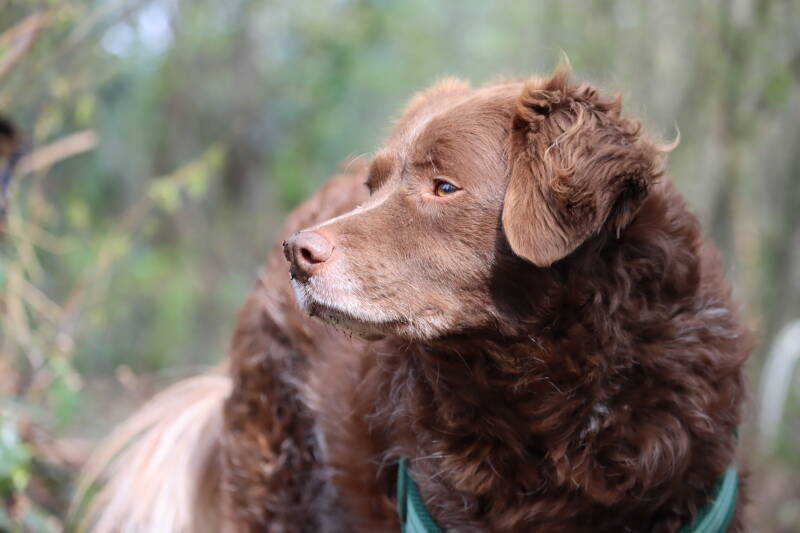
Emergency prep for a medium-sized dog (think border collie, beagle, cocker spaniel, small lab-cross — roughly 10–20 kg) centers on food that stores well, water in quantity, identification that survives chaos, and a dog whose training holds when the world gets loud.
A medium dog eats about 400–600 kcal per day, which works out to roughly 250–400 g of dry food depending on the brand and the dog's weight, so budget 400 g per dog per day to be safe: that's about 3 kg per dog per week, roughly 12 kg per month — stash a minimum of one month per dog in airtight, rodent-proof bins, and two months if you have room, because dry kibble keeps well and is the single most compact way to store a dog's survival calories.
Should your dog eats wet food, do not abandon that entirely — store a two-week supply of pouches or cans per dog. Wet food carries water and doubles as hydration.
Rotate the stash by feeding from the oldest first. Water runs much higher than for cats: a medium dog drinks roughly 50 ml per kg of body weight per day, so a 15 kg dog drinks about 750 ml daily, and in heat or stress that doubles — store a minimum of 20 liters per dog for two weeks, and if you have several animals, count the dog as your biggest water consumer after yourself.
Add two collapsible bowls per dog (one for water, one for food — the classic evacuation mistake is having one bowl and a dog that won't drink from a shared one).
Medications! Don't overlook these.
Identification is a medium dog's biggest calamity risk, exactly as escape is for cats: fireworks, storms, floods, and evacuation chaos send dogs running, so per dog — a well-fitted collar (not breakaway, unlike cats — a dog's collar should stay on) with a tag bearing your phone number, a registered microchip, and a photo of you with your dog stored in the go-bag, plus a spare collar and lead in the bag.
Add a slip lead in the kit: it doubles as a collar, catches a loose dog without grabbing, and fits in a pocket — many professional rescuers carry nothing else.
The go-bag per dog should contain: two weeks of kibble in a sealed bag (or a card pointing to the stash), the collapsible bowls, the two-week medication buffer, a small blanket or dog bed cover carrying the home scent (the same principle as the guinea pigs' fleece — familiar smell lowers a dog's stress measurably, and a calmer dog makes better decisions), a long line (10–15 m) for exercise without fences, waste bags (a genuine supply issue: count 2–3 bags per dog per day, so a two-week evacuation needs 30–40 bags per dog), a towel, a toy, and a jar of strong-smelling treats — the emergency tool that gets a stressed, off-feed dog eating and doubles as recall reinforcement when the world is terrifying.
Training is a medium dog's invisible preparedness item: a dog with a rock-solid recall and a down-stay can be walked through an evacuation queue, a shelter hallway, or a strange house, while a dog without one becomes a liability in exactly the situations where you can't afford it — practice the carrier (for smaller mediums), the crate, and above all being crated in a moving vehicle, because an emergency is the wrong time to learn your dog panics in a car.
Know your dog's specific dangers and sensitivities.
Finally, do the same drill as the rest of your animals: review the stash every three months, rotate food, test the go-bag, and rehearse grabbing dog, bag, bowls, and lead in under ten minutes — because the medium dog that is chipped, crated, called, and carrying its home-scented blanket is the dog that walks out of the calamity with its family, tail still working.

CATS.... they are everywhere or nowhere...how to prep for them?
Emergency prep for cats centers on three things: hiding-proof identification, food that doesn't require a fridge, and a carrier the cat will actually enter voluntarily — because a cat that hides or bolts in chaos is the single most likely animal in your household to be lost.
Start with food: a cat eats roughly 200–300 kcal per day depending on size, which translates to about one 100 g pouch of wet food plus 20–30 g of dry food, or about 60–80 g of dry food alone per day — so per cat, stash at least two weeks of wet food in pouches (14–20 pouches) and one month of dry food (roughly 2–2.5 kg) in airtight, rodent-proof bins; wet food matters because in a calamity water supply can be disrupted and wet food is up to 80% water, effectively doubling as hydration.
Rotate the stash by feeding from it and replacing it, so you're never stuck with expired emergency food.
Water runs about 200–400 ml per cat per day, more in heat or on a dry-food-only diet, so store a minimum of 10 liters per cat for two weeks, plus one spare water bowl per cat placed away from the food station — cats instinctively distrust water near food, and a dehydrated cat in an emergency is heading toward urinary blockage, which in males can become fatal within 24–48 hours.
LITTER
The litter situation is the most underestimated per-cat item: a cat needs at least one litter box per cat plus one spare (the golden rule: number of cats + 1), and in an emergency without transport you cannot buy litter — so stock at least 4–5 kg of clumping litter per cat per month (one month minimum), plus a folding travel litter box and a small bag of litter dedicated to the go-bag; a cat denied a litter box doesn't just get uncomfortable, it gets stressed.
The carrier is the heart of the kit, exactly as the travel bag was for your guinea pigs: one hard-sided top-loading carrier per cat (never cram two adult cats into one unless they're bonded and it's the only option), and critically, train the cat to enter it voluntarily before any emergency — leave the carrier out permanently with a fleece inside, feed treats in it, and practice closing the door, because the cat that only sees the carrier for vet trips will vanish under the bed the moment you reach for it, and a panicked loose cat in a blackout or flood is nearly impossible to catch. Inside the carrier, place a piece of fabric carrying the home scent — the cat's own bedding or a shirt you've worn — which measurably lowers travel stress in cats.
The go-bag per cat should contain: two weeks of food (or a checklist of where the stash is), a folding bowl, a small amount of litter in a sealed bag plus the folding litter box, any daily medications plus a two-week buffer supply, a flea/wormer dose, cornstarch or a styptic pencil for torn claws, wound spray, and a spare breakaway collar — breakaway only, so an escaped cat can't hang itself, and with a tag bearing your phone number, because collars are the fastest identification method for a stranger who finds your cat.
WHERE IS MY CAT?
Plan for hiding: in any loud, chaotic event (storm, flood warning, evacuation prep), cats hide first, so before an emergency arrives, close interior doors, block access to crawl spaces and under-bed zones, and know each cat's favorite hiding spot — this is the number one reason cats are left behind in evacuations, and searching for a hiding cat wastes the critical first minutes.
Review the stash every three months, refresh the food, test the carrier, rehearse a "grab-and-go" — each cat caught, in its carrier, bag in hand, in under ten minutes — and remember that unlike your horses, fish, and parakeets, the cat's biggest emergency risk is not supply failure but escape: the well-fed, chipped, carrier-trained cat with a scented fleece in its box is the one that comes home.
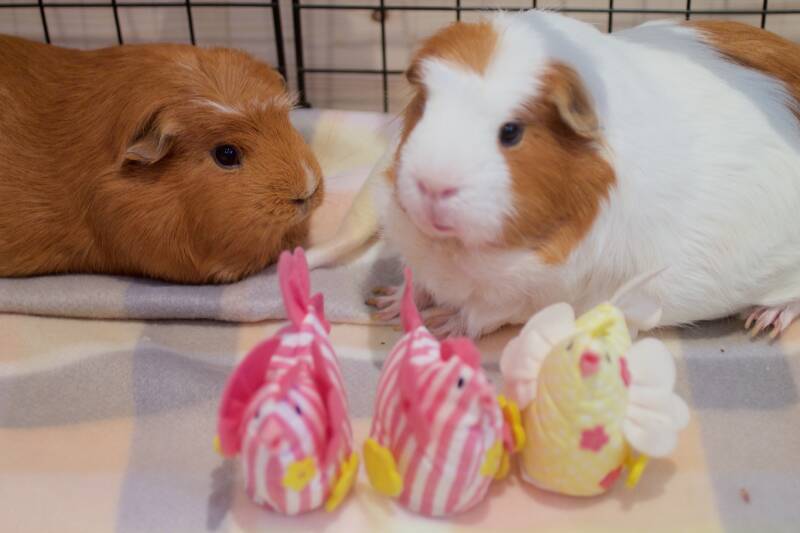
Guinea Pigs, Rabbits or Hamsters, our furry sweethearts
Warmth, Food supply, Low-stress travel setup. That is basically it.
A guinea pig eats about 50–80 grams of hay per day (roughly a large handful), and because their digestive system must keep moving constantly or they risk fatal gut stasis, hay is your number one emergency stockpile: budget 100 g per pig per day to be safe, which means 700 g per pig per week, or about 3 kg per pig per month — store at least one month's worth per pig in a dry, mouse-proof bin, and more if you have space, since hay keeps well.
Pellets run about 30–50 g (an eighth of a cup) per pig per day, so a 1 kg bag per pig lasts roughly a month; stash at least two months' worth, plus a sealed backup bag, because if food transport stops, guinea pig-specific pellets are exactly the kind of specialty item shops run out of first.
The truly critical per-pig item is fresh vitamin C: guinea pigs cannot produce or store it, and a pig deprived of vitamin C develops scurvy within two to four weeks — so stock vitamin C tablets or drops (about 10–25 mg per pig per day) with long shelf life, plus a stash of bell peppers or parsley and, as backup, a small bag of frozen vegetables, since in a grid-down scenario the fridge and fresh produce deliveries may both fail.
For water, a pig drinks 100–300 ml per day depending on temperature and diet, but plan generously: store at least 5 liters per pig for two weeks (much more if you're also using water for cleaning), and have at least one spare water bottle per cage plus a spare tip, because a failed valve in an emergency means a pig quietly goes thirsty.
Thus: store enough food, compressed hay and water for your piggies inside your calamity cabinet.
Warmth is a guinea pig's emergency weak point: they're comfortable between 18–23 °C and become stressed below 15 °C, so pack a thermal cover or fleece for the cage, a pet-safe heat pad (the kind that reflects body heat rather than needing electricity, plus a USB/battery-powered one as backup), and one fleece cozy sack per pig — never rely on mains heating during a power cut.
NOW TRAVELLLING....
The most important preparedness items, are a sturdy pet travel bag or carrier plus a dedicated backpack of supplies, sized for your whole herd but stocked per pig: hard carriers (one or two pigs per carrier, max), a soft pet-safe travel bag for shorter moves, and in the backpack, per pig one small fleece or piece of bedding from the home cage carrying their 'home' scent. That scent is not a luxury — travelling is genuinely stressful for guinea pigs, and stress suppresses their immune system and gut motility, so familiar-smelling bedding, their usual hay, a soft hut they know, and even the same person's worn t-shirt placed in the carrier measurably reduces panic; two pigs from the same cage should always travel together in the same carrier rather than separated, because companionship is their strongest calming signal.
In the backpack, also include a two-week supply of hay in a sealed bag (100 g per pig per day), a week of pellets in a small container, vitamin C tablets, a small water bottle with a bowl as backup (pigs may refuse to drink from an unfamiliar bottle), a saline solution and wound spray for the common emergency of a torn toenail or bite, critical care or recovery food powder (about 10–15 ml per kg of pig per feeding, this is the item that saves gut-stasis pigs when no vet is reachable), nail clippers, a thermometer and the vet's number, and a laminated note listing how many pigs you have with their photos. Prepare a small tent or playpen (or a fold-able grid enclosure) per group of 2–3 pigs in case you must shelter somewhere without a cage, and a spare set of cage liners or puppy pads, since evacuation shelters and relatives' homes will have none.
Because guinea pigs hide illness — a survival instinct that makes them look "fine" until they're not — do a daily check during any emergency, since a pig that stops eating even for 12–24 hours is already in danger; an emergency kitchen scale (battery-powered) is therefore a genuine preparedness item, one per household.
Identify your evacuation options in advance: which friend or family member will take small animals, which exotic-savvy vet is reachable without highway transport, and what your plan is if you must stay home for two weeks without deliveries — for most guinea pig owners, the honest answer is that one sealed bin of hay, pellets, vitamin C, and familiar-smelling fleece, per pig, is the whole difference between an emergency and a tragedy.
Review the stash every three months, refresh the scented bedding, rotate the hay, and do one practice "grab-and-go" drill so you know you can pack every pig, its companions, and its backpack in under ten minutes — because in real calamities, that calm ten-minute head start is the thing you'll be glad you rehearsed.

Parakeets combines the fragility of a small warm-blooded body with the flock-dependent psychology of a prey species — the killers in any calamity are cold, foul air, hunger, and panic, and your CALAMITY kit must fight all four.
Start with seed and pellets: a parakeet eats roughly 15–25 grams of food per day (about two to three teaspoons of seed mix, or one to two teaspoons of pellets), so budget 30 g per bird per day to be safe — that's roughly 1 kg per bird per month, meaning a 5 kg sealed stash per bird covers five months, and since seed keeps for a year-plus in airtight, mouse-proof bins, this is the cheapest insurance you'll ever buy.
Add millet spray as emergency comfort food: one spray per bird per week in the stash, because millet is to a stressed parakeet what scented fleece is to a guinea pig — a familiar, high-energy food that even a panicked, off-feed bird will almost always eat.
Water runs 5–10 ml per bird per day (they sip, but they spill), yet plan for real usage: store at least 1 liter per bird for two weeks, plus a spare water bottle or two — gravity-feed drinkers with ball valves fail, get chewed, and jam, so keep a simple open dish per cage as backup, and remember birds can go without food for a day but never without water.
Temperature is a parakeet's emergency weak point: keep it comfortable at 20–25 °C — so per cage, prepare a thermal cage cover or thick blanket, and per bird, a cozy hut or enclosed perch tent they can huddle into; in a winter power cut, move the cage to the smallest interior room, cover three sides of the cage, and put a pet-safe thermo-perch or hand-warmer wrapped in fabric near (never touching) the birds, since two parakeets huddled together under cover can ride out days of cold.
NO PANIC!
Panic is the underestimated killer: parakeets are flock animals that experience isolation as mortal danger, so never evacuate or separate a bonded pair — one carrier per pair, with their own cage's perch and a handful of the exact floor covering from home, because their home scent calms birds exactly as it calms guinea pigs.
For travel, the single most important items, as with your other animals, are a proper travel carrier plus a dedicated backpack: a small hard-sided carrier (one to two birds per carrier) with a low perch installed and a towel inside, and in the backpack, per bird — seed in a small sealed bag (30 g per bird per day), a water bottle plus a small dish, a slice of their usual cuttlebone, a spray of millet, a small piece of fabric from the cage cover carrying the flock's home scent, and cornstarch or a styptic pencil for the classic parakeet emergency of a broken blood feather (a genuinely life-threatening bleed, since a budgie has only about 1–2 ml of blood to lose and can bleed out in minutes).
Add to the backpack a small towel for restraint (a wrapped bird in a towel is calmer and safer in hand than a flapping one), nail clippers, and a card with the number of an avian vet — because in a calamity, a general vet may be unreachable or unfamiliar with birds, and a parakeet that stops eating for 24 hours is already in liver-danger territory, so a two-week stash of their exact usual food, not a new brand, matters critically (birds starve rather than eat unfamiliar food).
Check the stash every three months, refresh the seed, test the thermal cover, rehearse packing the flock and backpack in under ten minutes, and keep the backpack hanging next to the carriers — because the parakeet pair that travels together, smelling of home, with millet in the bag, is the pair that comes through the calamity calm enough to keep eating.
IN SUMMERY
Preparedness is an act of pet love
When we bring an animal into our lives, we make them a promise — that we will feed them, keep them warm, keep them safe — and that promise doesn't pause when the power does. T
here is a peculiar peace that comes from knowing that a storm, a grid failure, a broken supply chain will find you ready: hay in the dry store, hay for the pigs, water bottles filled, carriers by the door, the fleece that smells of home already folded inside. Panic is not the opposite of danger; it is the fruit of unreadiness.
The unprepared heart races in the first hour of an emergency because it must do a month's worth of thinking in an afternoon, while the prepared heart moves calmly, because the thinking was finished long ago, on an ordinary Tuesday when nothing was wrong.
Our animals feel stress. They feel calamities.
We are their weather, their shelter, their herd-mates, and their luck. That is why our pets deserve preparedness.
Nothing dramatic is required — no bunkers, no obsession, just the humble arithmetic of how much a creature eats and drinks per day, multiplied by the days we might have to provide for it alone.
Preparedness done well is invisible, almost boring: a bin rotated in spring, a battery tested on a quiet evening, a drill that ends in laughter.
Panic is not needed. Do some organizing in advance, so the work is already done.
Marga van der Vet
Paula Kuitenbrouwer
~Pet Owners and Pet Lovers~
Add comment
Comments