Your Positive Preparedness Team bought two preparedness books and read them for you.
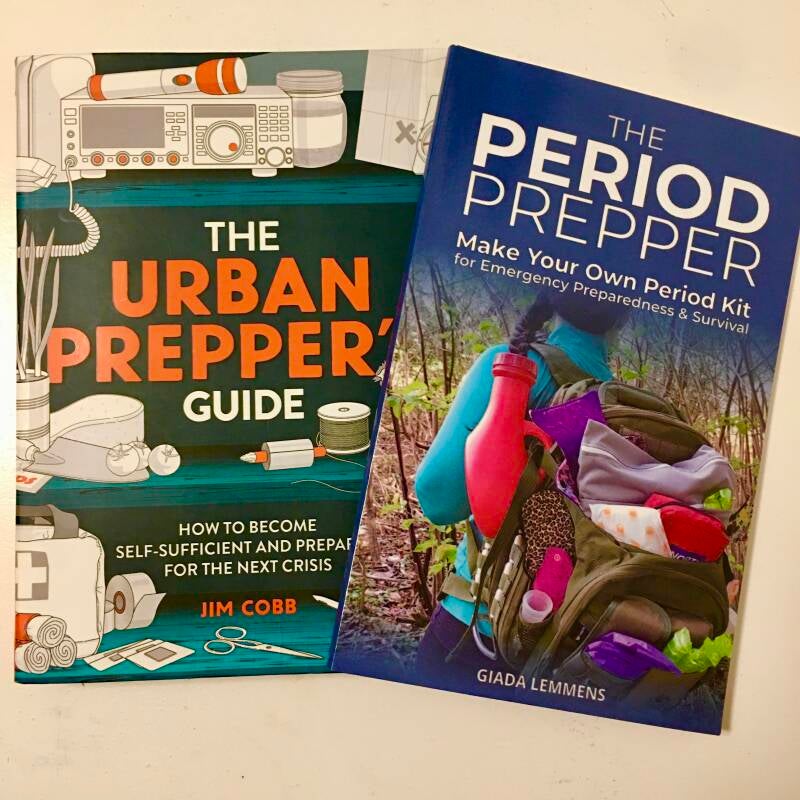
The Period Prepper
by Giada Lemmens (2023)
ISBN 9781738938513
Highly Recommended
A wonderful, much-needed book. Lemmens fills a genuine gap in emergency-preparedness literature: what women are supposed to do about their periods when disaster strikes. She starts by drawing attention to Toxic Shock Syndrome and the dangers of poor personal hygiene and neglected infections during emergencies — a serious risk most preparedness guides never mention.
Women and mothers have to step up writing about preparedness. It is mainly a bush craft, exploration, survival male mindset and prep-shops feel like that too. Like strong half-military male business. We need more women talking about preparedness for women and mothers. We need more women products in prep-shops. Even in camping shops where I buy freeze dried food packages for my prep cabinet, where is a ready to buy Period Kit like Giada Lemmens recommends? Do away half of your knives-behind-glass collection and replace that with ready-to-buy full gear period kits, please.
Lemmens cares for the subject shows on every page, and her checklists are genuinely usable, grounded in her own experience building period kits through real disruptions, including an ice storm and a flood.
Although written with menstruation in mind, the book applies to all women — including those who no longer have periods but still deal with infections, sensitive bladders, menopause symptoms or incontinence.
Highly recommended for every emergency kit, and every household.
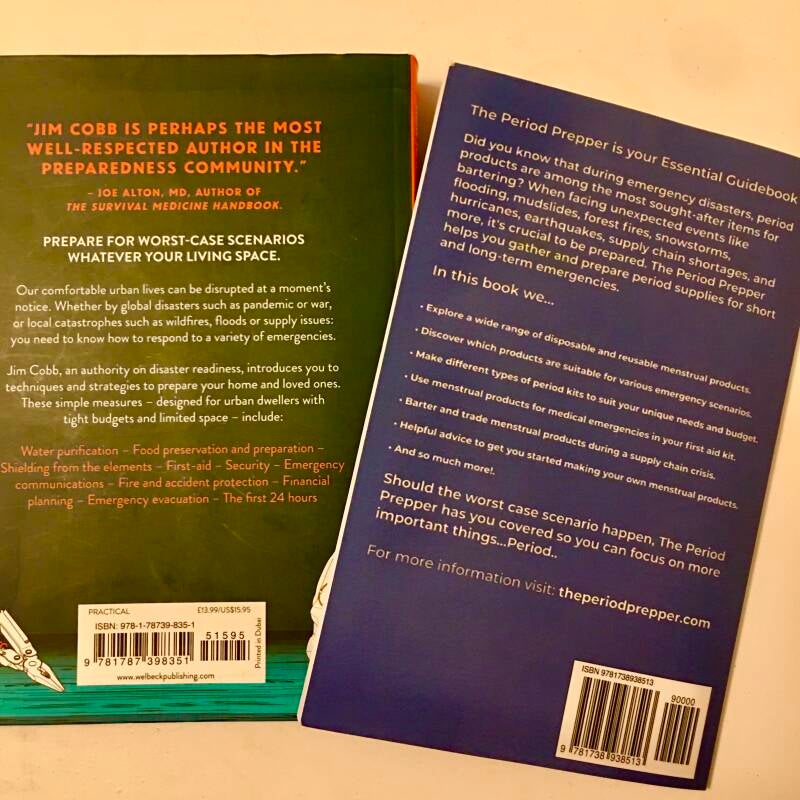
The Urban Prepper's Guide
by Jim Cobb (Welbeck, 2022)
ISBN 9781787398351
Jim Cobb is a well-respected name in the preparedness community, and this book delivers what it promises: sensible, budget-friendly steps for city and suburban dwellers on water, food, power outages, evacuation and the first 24 hours of a crisis.
The disclaimer on page 2 says it plainly — the book is built on a basic understanding of United States law — and the content follows suit. The home-security chapter leans on weapons and sprays, and parts drift into wilderness bushcraft that has little to do with urban European realities.
It also assumes a social fabric of "everyone for themselves," whereas European calamities — as I have witnessed myself — tend to pull communities together; people seek each other out, both during the event and for healing afterwards.
I experienced this when in my own home town an old house blew its top due to a gas explosion. My daughter was on her way downtown and 70 meters away from the explosion. She ran to a nearby hotel and stayed there till emergency services responded. But this didn’t prevent my daughter -who luckily could be picked up by my husband- was shocked and later deeply touched by the very quick and effective emergency responses.
A woman was reanimated in the pedestrian zone which was hard to witness. My daughter was cared for so kindly by the hotel staff. On their way home, students stopped my husband and daughter -who were visibly shocked-. The students asked whether they could do something for them and others. It felt like a warm hug (later my daughter would bring them a big bar of chocolate to thank for their kindness). The hotel took in the neighbourhood of whom many houses were damaged and only returned back to them after a few days of extinguishing fires and securing the old homes.
I will not forget the big police drones in the sky hanging over the area and visible from our balcony. It felt good to know we have great emergency preparedness on medical, fire department, and police level.
The next day I went back with my daughter on our daily walks because I didn’t want the area to become a place of avoidance. Although the heart of the affected area was sealed off, around it there were so many kind people seeking support and giving support to all those who had witnessed the explosion. Not every day it rains glass, roof tiles and ash. But to the citizens and shop owners in the area it became a moment of kindness and support. I like this so much better than thinking of my fellow citizens as weaponized burglars.
The core chapters on preparedness basics are solid and universal, but European readers will need to translate large portions of the advice to their own legal and cultural context.
Recommended but keep thinking and prepping European.
~Your Positive Preparedness Team~
Paula Kuitenbrouwer
Marga van der Vet
Add comment
Comments