I have been following the news that the United Kingdom has asks for more preparedness awareness and initiative. Some time after I read about the call for more preparedness, British supermarkets noticed shoppers were reacting.
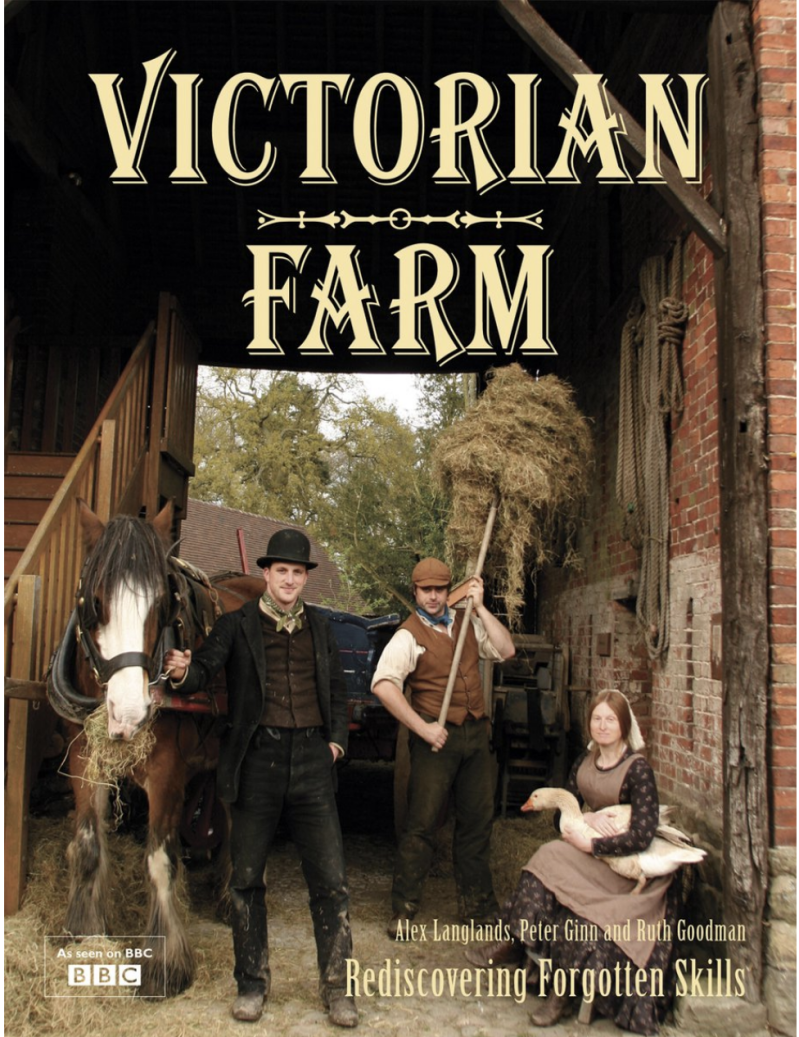
It made me thing back of the famous and much loved BBC series Victorian Farm, and later War Time Farm, which my family watched a few years in the period leading up to Christmas. We found it so inspirational! And often when I write and think of preparedness, I do remember scenes of the series.
Let's have a look at a very short history of how UK governments have raised preparedness awareness with the public:
WWII and Civil Defence (1935–1971)
Yes, we watched War Time Farm too, a wonderful series that shows how intense the government worked with farmers to get the people would not die from hunger.
It began with the Air Raid Precautions (ARP) Department in 1935, which became the Civil Defence Department — the era of gas masks, public shelters, and blackout drills. Wartime authorities saw propaganda as essential to keep morale high and secure public cooperation.
Cold War: Protect and Survive (1960s–1980s)
Preparedness awareness took its most famous form here. In 1964 the Home Office produced Civil Defence Information Bulletin films — short clips on fallout rooms, warning signals, and evacuation, to be broadcast only if nuclear war loomed. Nuclear civil defence policy was largely abandoned in the 1990s after the Cold War ended.
The modern framework (2001–today)
A series of shocks — the Y2K scare, 2000 fuel protests, autumn 2000 flooding, and the 2001 foot-and-mouth epidemic — convinced the government that emergency planning was inadequate. In July 2001 it created the Civil Contingencies Secretariat in the Cabinet Office, with its remit expanded after 9/11 to cover large-scale terrorist attack.
After COVID, the focus was on long-term national resilience and public-facing preparedness guidance. In short: What started with WWII air-raid precautions, peaked (controversially) with Cold War nuclear campaigns, and evolved into today's all-hazards resilience framework built around the Civil Contingencies Act 2004.
Happy & Educative Advice
We like to recommend a BBC series to you, dear reader.
In a fascinating experiment the BBC follows a team of historians who will spend a year recreating farm life. We advise you to watch the series of Victorian Farm and War Time Farm on YouTube. And/or to buy the book. (If you like it as much as we do, also watch Tudor Farm, Tales of the Green Valley and Christmas at Victorian Farm).
WHY?
Diving happily into British farming history will make you less scared to live -not for a long year or even a season- without electricity, without gas, no flushing toilet … and no tractor!
Could you survive a year on a Victorian farm?
Could you live on War Time Farm?
Watch the series and run that question through your mind!
This isn't about buying land or having a large vegetable garden. The historians -who you may come to like as much as we do- show how it was at that time to be resilient despite weather disasters and harsh winters. It is so interesting to see how things were and how people in the past dealt with hardships. Ruth, Peter and Alex are positive historians; much like we are positive preparers. To happily learn from the past is super interesting and entertaining.
Watch it -or read about it- to get inspired, to update your historical knowledge and to learn a bit on preparing. You will start liking the historians Ruth, Alex and Peter! The thought experiments of living through past time hardships (and joys!) will inspire you. If not, we will eat our shoes.
~Your Positive Preparedness Team~
Add comment
Comments