Musings provoked by an old Ikebana postcard
I noticed an old postcard in a stationery shop. It’s an illustration from a 1920s book on Ikebana, the Japanese art of flower arrangement. The card flooded me with memories.
Once, I visited an exhibition where Korean women had organized an Ikebana event. They were elegant, friendly, and eager to share their art. A kind lady guided me to a long table displaying numbered arrangements. I was asked to play the judge.
Most of the Korean Ikebana were minimalist: bare branches, a few decorative stones, and a sparse but lush selection of flowers. It struck me how different these compositions were from European floral arrangements—especially those of the Dutch Golden Age, like the lavish bouquets painted by Rachel Ruysch or Ambrosius Bosschaert. My newly bought postcard, with its delicate Ikebana design, only highlighted the contrast.
At the time, the full meaning of minimalism and asymmetry escaped me. The Korean ladies laughed kindly when I favored the most European-influenced Ikebana—the fullest, most lush one. Clearly, this confirmed me as very much a European at heart.
It would have been fascinating to judge again after years of living in Korea, immersing myself in its art through exhibitions, galleries, and museums. The second time around, I’d likely have chosen the most minimalist Ikebana composition!
The juxtaposition of maximalist and minimalist art is a wonderful thing. Both have now integrated into my life, happily coexisting. But it took time to oscillate between the two extremes.
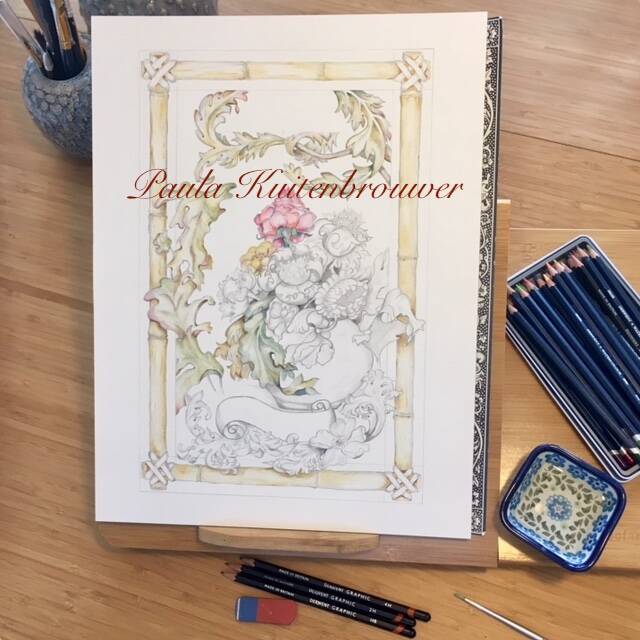
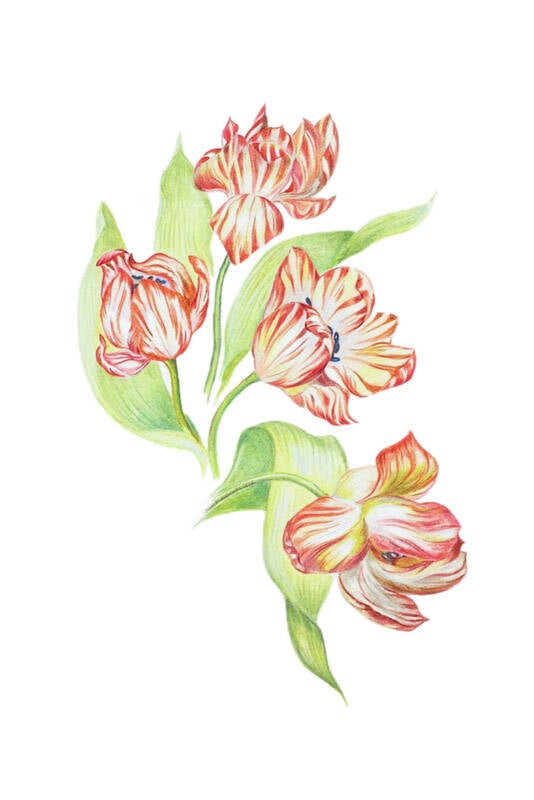
I still love drawing and painting lush floral displays (like the one on my desk with swirling Acanthus plants surrounding a flower vase), but I also love minimalism, like the clean cut tulip-heads.
After switching from minimalist to maximalist and back, I started to noticed that we don’t have to choose.
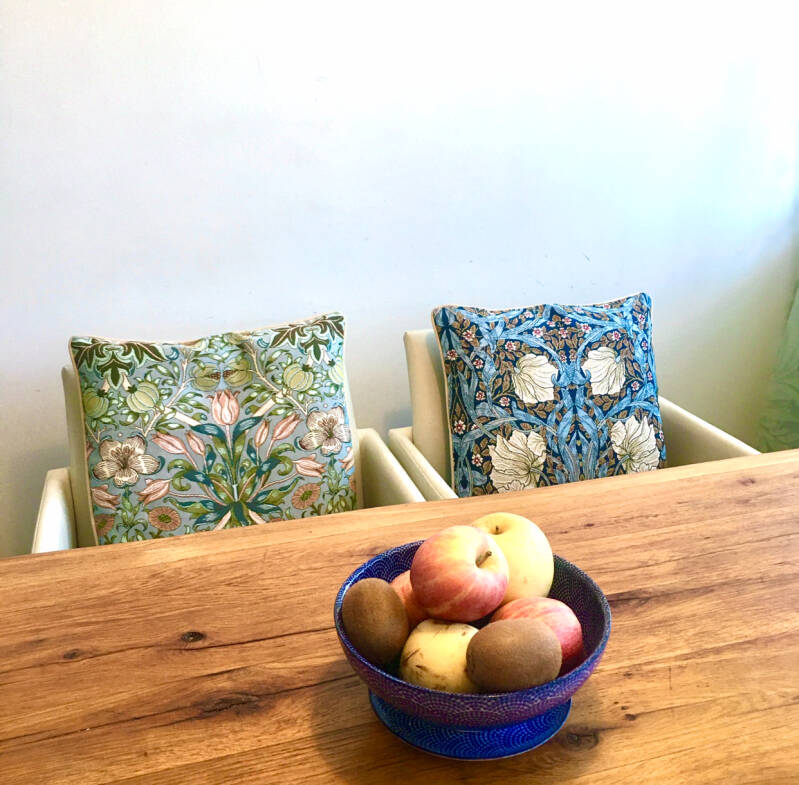
See my kitchen table. Very minimalist with a wooden table and white chairs. But very maximalist with William Morris pillows. And a full fruit bowl.
Our homes can have minimalist rooms or corners, coexisting with maximalist spaces. Call it “fusion,” and no style police will come knocking.
What are your favorite Ikebana displays? Where do you 'fuse' minimalism and maximalist in your home? How do you mix them?
We’d love to hear!
Paula Kuitenbrouwer

Reactie plaatsen
Reacties