I like to say a few words on practical arts such as needle work, woodwork, and pottery. Where fine arts are created primarily for aesthetic purposes, practical arts have an applied function.
Inside our homes we like to surround ourselves with practical art. We buy the nicest dinner plates and tasteful designed furniture. Feng-shui, Chinese traditional practices used to harmonize individuals with their surrounding environment, also uses practical art. Specific animal artworks are put up in different areas of a home; they are believed to have different functions. These animals can be shown as statutes, ceramics, paintings, etc.
More qualifications
When it comes to practical art, often an object that serves a practical function, holds many more qualities that fall outside the somewhat modest qualification being practical art. For instance, a beautiful religious painting inside a church is more than practical art; it might be painted by a famous Renaissance painter which makes the church a museum or a tourist attraction as well. Likewise, a dinner plate can be antique porcelain made by a famous German porcelain painter and thus a collector item. A violin can be a Stradivarius.
Practical art is important
The practical part of art fascinates me because it tells so much about the society in which it was bought, commissioned, used and - in case of The Night Watch by Rembrandt- dismissed and stored away for a long time. Aiming for art to have a practical function next to an aesthetic purpose is, to me, a justifiable ambition.
For all those artists working on a practical piece of artwork, art that will wear and tear, art that will be used or gifted, I would like to say; 'Keep going'. Because when art resonates with our feelings or thoughts, we look inside and see something of us projected outside of us. This helps us to bond with the environment outside of us and by bonding we subtly work on improving our lives.
Keep creating, buying, gifting, and valuing practical art. It is a win-win-win. It adds lovely handmade elements to your life, it shows appreciation for artisans, it is anti-industrial (and often more environmentally friendly produced).
Paula Kuitenbrouwer
Artist at www.paulakuitenbrouwer.com.

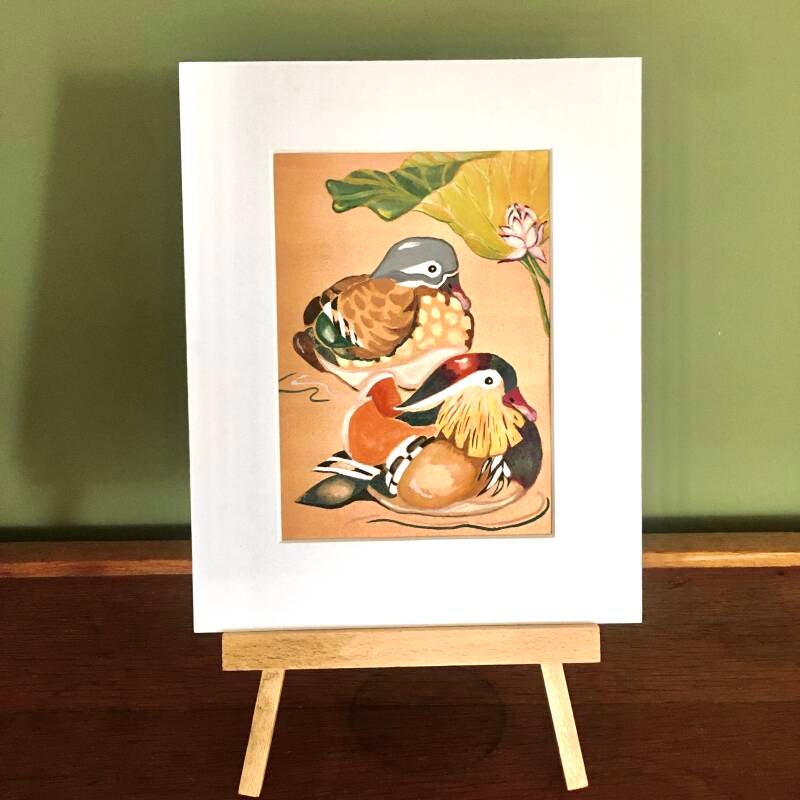
Mandarin Duck art cards by Paula Kuitenbrouwer
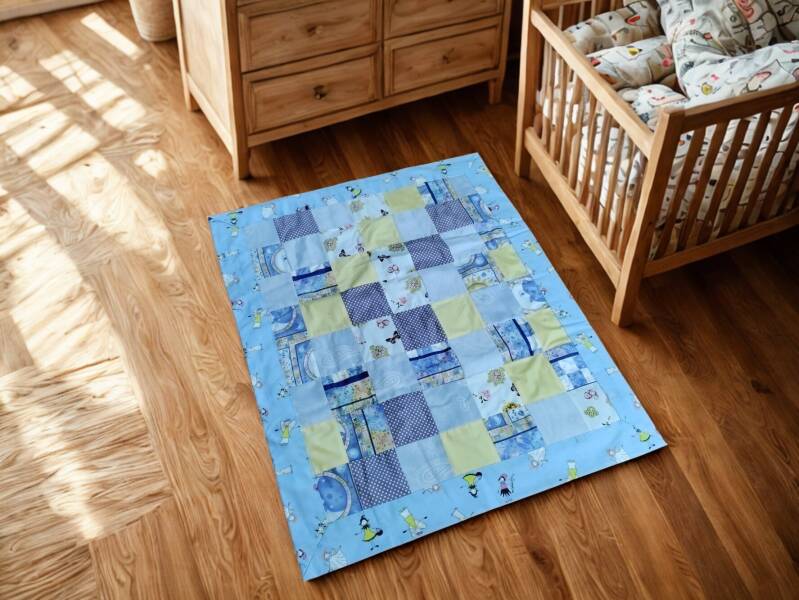
Baby-quilt made by Marga van der Vet
Read on more wonderful posts:
At Handmade Luxury Home, Marga and Paula -founders of HLH- share the same roots but have lived diverse lives across continents. Our passion for writing about our artisan lives and craft-making runs deep, as cultural influences, local nature, and traditions shape our perspectives.
Explore our latest insights and inspirations in these blog posts:
What is the Colour of Matcha?
Pantone Colour of the year 2027, predicted by HLH
Marga van der Vet & Paula Kuitenbrouwer
Add comment
Comments