
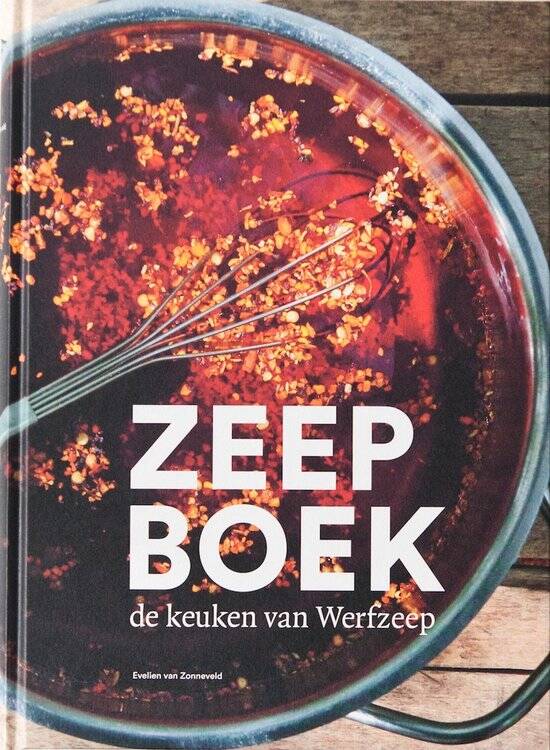
One small note about the book
There is one important thing to mention: The Soap Book is written in Dutch. So, naturally, it is most suitable for readers who understand the Dutch language. That said, there are apps you can use to scan text and translate it simultaneously.
The physical book itself is also worth mentioning. It is a beautiful hardcover edition and, in my opinion, one of the finest soap-making books currently available. It feels like a real book to keep, rather than simply a practical manual.


Some books stay with you long after you have finished reading them.
The Soap Book by Eveline van Zonneveld is one of those books for me. I read it some time ago, when I was already interested in handmade soap, and I still remember how much I enjoyed it. So I thought it deserved a place here on Handmade Luxury Home.
Because making things by hand is not only about the finished product. It is also about the feeling of making something yourself, using natural ingredients, learning an old craft and bringing a little more of that handmade feeling into your home.
From plant to soap
The subtitle of the book, The Kitchen of Werfzeep (loosely translated as The Studio of Werfzeep, the name of Eveline’s company), is what makes it so fascinating.
Eveline van Zonneveld gives us a look behind the scenes of Werfzeep, a Dutch handmade soap company. But the book goes further than simply showing us how soap is made.
One of the things I love most is the journey from plant to finished soap.
The book explains the ingredients and the traditional process of making soap, and it includes many recipes. You begin to understand that a bar of handmade soap can be much more than something you simply buy in a shop.
It can contain plants, flowers, oils and herbs. It can have a story. And somehow, that makes washing your hands feel a little different.
A big book about a simple thing
The first thing you notice about The Soap Book is its size. It is a substantial book, with around 440 pages packed with information, photographs, recipes and stories. But it never feels like a dry technical manual.
The language is friendly and easy to understand. Even the more complicated parts of soap making are explained in a way that makes them feel approachable.
There are also many warnings and safety instructions, and these are very important. Soap making involves sodium hydroxide (lye), which can be dangerous if it is not handled correctly. This is definitely a craft where you should read the instructions carefully and work safely.
So although the book feels warm and inviting, it also takes the craft seriously.
If I could change one thing, however, it would be the cover. The cover is attractive, but personally, I would have loved to see one of the beautiful photographs of the soaps inside the book on the front. There are so many gorgeous pages that could have made an even more inviting cover.
Still, this is only a small personal criticism of an otherwise exceptionally beautiful book.
Soap making is an old craft
Perhaps this is one of the reasons I like the book so much.
Today we are surrounded by mass-produced products. We can buy almost anything ready-made. But there is something very satisfying about returning to an old craft and understanding how things were traditionally made.
Soap making is a wonderful example.
You take simple ingredients and, through a carefully controlled process, turn them into something useful and beautiful.
That is exactly the kind of craftsmanship we appreciate here at Handmade Luxury Home.
Beautiful enough for the coffee table
Then there are the photographs.The Soap Book is a beautiful book to look through. The pictures show the ingredients, the plants, the soap and the process of making it. You can almost imagine the smell of herbs and essential oils coming from the pages.
It is one of those books where you can sit down with a cup of coffee and simply browse through it. And before you know it, you are thinking:
Perhaps I should try making soap myself.
That is a rather dangerous thought when you are already someone who enjoys handmade crafts!
From lavender to nettle
There is a wonderful range of recipes in the book. Among them are soaps made with almond blossom, nettle, pine, jasmine, calendula, lavender, nasturtium, anise, rosehip, walnut, and comfrey.
I particularly like the idea of using plants and flowers in this way.
It reminds me that many things we consider ordinary today can become something special when we slow down and look at them differently.
A plant growing in the garden can become an ingredient.
An ingredient can become soap. And that soap can become part of an everyday ritual.
A book that makes you want to make
That, for me, is the greatest strength of The Soap Book.
It does not simply tell you about soap. It makes you want to make something.
The recipes and instructions are detailed, and there is enough information for both beginners and people who already have experience with soap making. At the same time, the book is enjoyable even if you have no intention of becoming a soap maker.
Sometimes a craft book can be valuable simply because it makes you curious. And curiosity is often where a new hobby begins.
My recommendation
I would certainly recommend The Soap Book to anyone interested in handmade soap, natural ingredients and traditional crafts.
But I would also recommend it to people who simply love beautiful handmade things.
It fits very well with our Handmade Luxury Home's philosophy: choosing quality over quantity, appreciating craftsmanship and finding pleasure in things that are made slowly and with care.
I read this book some time ago, but it has stayed in my mind. And that is usually a good sign.
It is informative, inspiring and beautifully made. And if you are looking for a lovely gift for someone who enjoys natural products, crafts or a little bit of old-fashioned home making, this book would be a wonderful choice.
Just be warned...
After reading it, you may find yourself looking at the herbs in your garden and wondering:
“Could I make soap from that?” 😊
Marga van der Vet
~Textile Artist~
Add comment
Comments