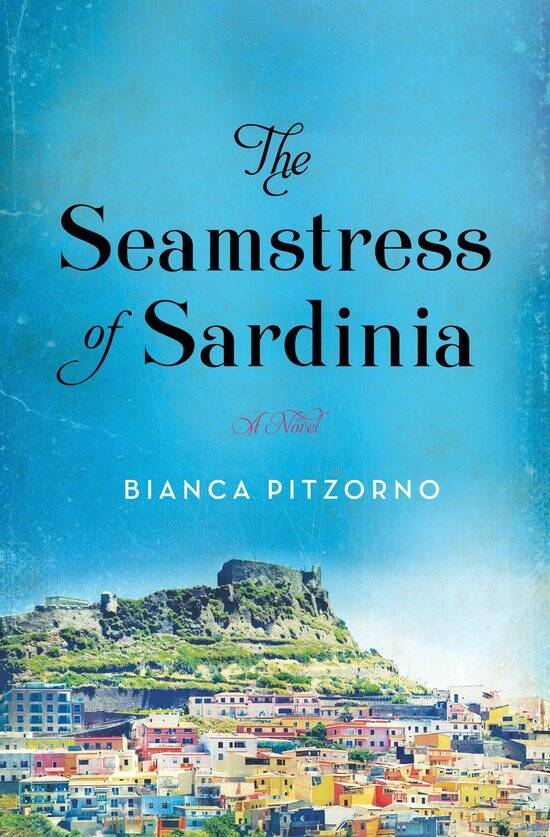
A Beautiful Story About Sewing and Life in 19th-Century Italy
The Seamstress of Sardina is written by Bianca Pitzorno. It is a beautiful novella about part of the life of a seamstress in the 19th century. The story takes place in a small village in Sardinia, Italy.
An Orphan and Her Loving Grandmother
The main character tells her own story. She is an orphan who grows up with her grandmother. Her grandmother earns very little money from her work as a seamstress, but she lovingly raises her granddaughter so that she does not have to go to an orphanage.
Her grandmother teaches her about life and about the art of sewing. She often takes the girl with her when she works in the homes of wealthy families.
Sadly, her grandmother dies, leaving the young seamstress on her own. Fortunately, she can continue working as a seamstress for private clients. These families appreciate both her skills and her quiet, discreet nature.
In return for doing extra work, she also learns to read and write. This was unusual for a woman of her social class at that time. She is much more intelligent than most people realise, but she will never escape her position as a simple seamstress in society.
Independent Women Who Inspire Her
During her work, the seamstress meets several women who have a great influence on her life.
There is Esther, a wealthy woman who leaves her husband after a difficult childbirth. Then there is Lily Rose, a modern American woman who pays the seamstress very generously but dies in mysterious circumstances.
She also works for the Provera family. They are extremely wealthy, but their lives are made unhappy by the husband's greed.
The seamstress spends many hours in these homes. While she works, she hears the family stories, learns their secrets, and discovers their different ideas about life.
Her work gives her a special place in their world. She is often present but remains in the background, quietly observing everything around her.
When Sustainability Was Simply Normal
One of the most beautiful aspects of this book is its love for the art of sewing.
The author describes fabrics, clothing, and sewing techniques in great detail. We discover how carefully people once treated their clothes.
A dress could take months to make. Even the clothes and accessories needed for an expected baby were planned with great care.
The seamstress is especially skilled at embroidery. Clothing is made personal through beautiful details, and the women who wear these garments treasure them.
Clothes were not disposable products. They represented time, skill, money, and care.
As someone who loves sewing and costume making, I find this part of the story particularly interesting. It reminds us of a time when people valued craftsmanship and made things to last.
Today, we live in a world of mass-produced clothing and fast fashion. This story shows us a very different way of thinking about clothes and the work behind them.
Love, Jealousy, and Deception
For the first part of the book, the story feels gentle and almost sweet. But halfway through, the mood becomes darker.
A young man from a wealthy family falls in love with the seamstress. He sees no problem with marrying her, even though she comes from a much lower social class.
His mother strongly disagrees. She does everything she can to have the seamstress arrested, suggesting that she has stolen some jewellery.
The seamstress is innocent of this theft, but she has received an engagement ring from the young man.
She is taken to prison, and her home is searched from top to bottom. Only a young neighbour knows where the ring is hidden. The girl has come to live with the seamstress after her mother died of tuberculosis.
The hiding place of the ring is a wonderful little detail for anyone who sews.
You will understand why this hiding place is so clever only if you know how a sewing machine works and are familiar with its inner parts. It is a lovely example of how knowledge of a craft can become part of a story.
And do the seamstress and the wealthy young man live happily ever after?
In a way, yes. But the afterword reminds us that real life does not always follow the path we expect.
The Fabric in Her Hands: A Lovely Read for Creative People
This novella is a beautiful example of storytelling by an author with a great talent for creating vivid scenes and believable characters.
The story flows well, and the descriptions make it easy to imagine life in a small Italian village during the 19th century.
For anyone who loves sewing, historical clothing, embroidery, or traditional crafts, this book is especially enjoyable.
It is also a lovely gift for creative people who appreciate the history behind their craft.
Above all, The Seamstress of Sardina is a tribute to the skill and dedication of seamstresses.
It also reminds us of a time when sustainability was simply part of everyday life, long before mass-produced textiles and today's throwaway culture became the norm.
My recommendation: If you love sewing, historical costume, traditional craftsmanship, or stories about the lives of women in the past, this novella is well worth discovering.
Sometimes, a story about a seamstress can teach us much more than how clothes were made. It can also show us how people lived, loved, worked, and survived in a world with very different rules from our own.
Add comment
Comments