
The question 'Am I an Artist?' my sister ~needle artist~ Marga van der Vet, asks herself at our website Handmade Luxury Home. I loved reading her reflections. She finds a well-balanced answer by highlighting her half-a-century-long work experience and self-education. Not only that, she highlights more characteristics, looking deep into herself and her life, which you can read here.
A Modern Question
I like to put my sister's musings in the perspective of art history. For so long, women artists were not allowed to enroll themselves in educational institutions. When they were judged by men as having exceptional talent, these women were trained outside academic institutions by fathers or tutors. Some were lucky to have these fathers or patrons, because many women — with talent — had no protective or educational source teaching them the trade, no high-born husband, no royal patron.
Thus, the question whether a formal education makes you an artist is, for me, a modern question. Because it is only about 'three minutes' back in our long human timeline that women received access to schools and educational institutions. Still, many of us — women — receive their training by mothers, fathers, uncles, aunts, friends, becoming their successors. Or are autodidact. Especially in poor countries, many artisan skills are silently — out of the spotlight — passed on to the next generations.
With the long, long history of women being excluded from the world of arts,
I wonder how many men ask themselves the question whether or not they are artists.
Perfectionism
My sister mentions her perfectionism: how much needle art takes up her brain space, to the extent of favouring it over social engagement. Marga's '...last thoughts before sleep and first thoughts when waking up' is about textile art.
This, to me, characterises an artist. The driving force - the passion- is all consuming. As James Rebanks writes in The Place of Tides; 'People get lost in (such) craft for decades, in the skill, intimacy, and thoughtfulness its requires, the work becoming its own reward'. (Chapter 5 , Penguin). Yes, Marga and I think and feel deeply that our work has become its own reward.
Last, my sister reflects on her constant self-improvement and need for new challenges.
This, according to ancient Japan, is the mind of a real artist.
Japanese Artisans
I have learned that in Japan it is not done to talk about yourself as being an artist. The great ceramic, fine arts and craft masters are so busy with the endless perfecting of their artisan crafts that they — even at the end of their lives — do not believe or proclaim themselves to be artists. An artist you might become after death, when the public places you in the canon of great artists.
This I have given thought to too. I have concluded that it is beautifully humble, but also not doable in West-Europe. You can't register yourself at the Chamber of Commerce as a 'nobody... really' or 'perhaps an artist after death'. Or 'a perfectionist'.
South Korea's Artists
South Korea does it better. This country understands the notion that crafts are a culture worth protecting. South Korea honours its master artisans and traditional performing artists as Living National Treasures (ingan munhwajae, 인간문화재, "human cultural assets").
What is a Living National Treasure?
Under the 1962 Cultural Property Protection Law, these potters, weavers, bow-makers, dancers, singers and chefs receive state support and national honour in exchange for the one thing only they can do: keep an endangered tradition alive by practising it publicly and teaching it to students.
The system, created after the Korean War to rescue vanishing skills from modernisation, so impressed the world that it inspired UNESCO's Living Human Treasures programme. Its premise is beautiful: some of a nation's greatest treasures are not objects at all, but people.
South Korea, this is important, does not give this status to all who aspire to be artists. Still, it acknowledges the importance of artists for the reproduction of its culture.
We Need Many Artists!
We need young and older people stating boldly that they are writers, artists, and artisans in order to be seen and heard. To have their interests represented. We need powerful artist movements. We need judicial protection (against copyright infringement and AI). We need artists to proclaim they are artists. Some of us will reach the status Living (or dead) National Treasures like Bach, Rembrandt and Vermeer. Many will not, but in order to have one Bach, you might need a few million trying to become a Bach.
Returning to art movements, like the Impressionists, who fought hard to have their work exhibited. To all other brotherhoods, sisterhoods, and emerging art movements that needed to fight the establishments — or were sidelined by them — by making a mark for themselves. Think of the Pre-Raphaelite Brotherhood (William Morris etc.), the group around Carl Larsson, Der Blaue Reiter (Kandinsky), the Vienna Secession (Gustav Klimt). Also, women: the suffrage embroiderers, Hilma af Klint's De Fem (the Five), and many more.
(continue below...)
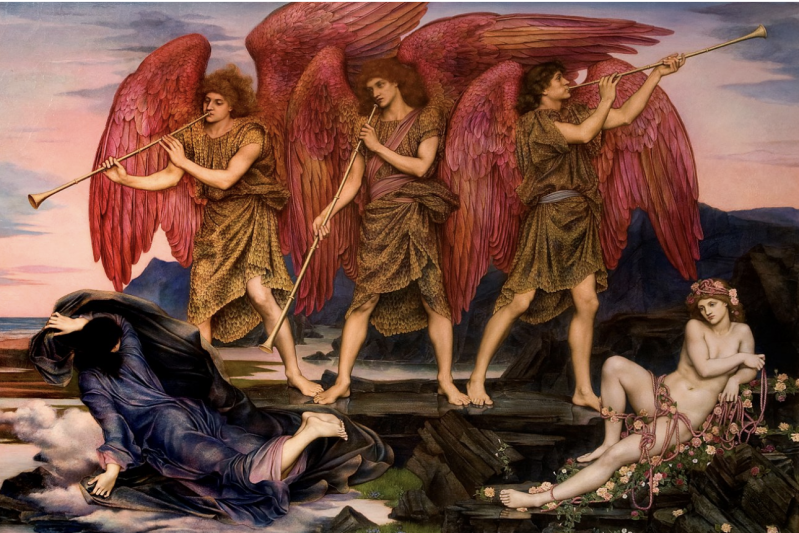
Should all of the artists involved in these art movements had done the humble Japanese thing — waiting till they were of a very high age to call themselves artists or artisans — we artists would fail even more miserably against forces that steal our work and/or exploit us (7 euro cents per sold book, I recently heard).
With that in mind: freely call yourself a writer, artisan, artist. Join the battle of trying to make a living and share your experiences and success. And vote for a basic income!
Have a look at what Ireland did (basic income)
When Ireland decided to protect its creative sector, it went further than grants and prizes: it gave money, unconditionally, to artists themselves. From 2022, the Basic Income for the Arts (BIA) pilot paid €325 a week for three years to 2,000 randomly selected artists and creative arts workers — not as charity, but as an investment in a large and valuable creative industry that risked bleeding young talent to emigration and day jobs.
The independent cost-benefit analysis, published in 2025, delivered an unequivocal verdict: for every euro the state invested, Irish society received €1.39 back — more than €100 million in socio-economic benefits in total — through the taxes artists paid, their increased spending, reduced welfare dependence, greater public engagement with the arts, and measurably improved well-being. That is impressive, isn't it!
The deeper return was in the creative economy itself: recipients spent on average 11 hours more per week on their artistic practice than the control group, produced nearly four more new works per half-year, and were far more likely to stay in the arts — while among artists without the income, one in seven had abandoned artistic work within two years. In other words, creatives used the security not to rest, but to build: investing in their practices, their businesses and their audiences.
The evidence convinced the government to make the scheme permanent from 2026 — the first country in the world to turn a basic income for artists from experiment into policy.
The lesson travels well beyond Ireland:
give creatives a stable floor,
and they do not merely survive;
they generate growth, culture and
public value many times their keep.
Daisy Fancourt's Findings
Then there is Daisy Fancourt, a British scientist who has become one of the world's leading authorities on the intersection of arts and health.
As Professor of Psycho-biology and Epidemiology at University College London, she leads a research group dedicated to understanding how social and cultural factors — including loneliness, community, and participation in the arts — affect our physical and mental health. Her work is unusually wide-ranging: she has authored and co-authored hundreds of studies and advised the World Health Organization.
In 2023 she published the book The Arts in Healthcare — released in Dutch as Kunst als medicijn — in which she synthesised the findings of thousands of scientific studies into one compelling conclusion. Her findings have reached the Dutch public through interviews in NRC. Fancourt's central message is disarmingly simple: art is not a pastime, but a pillar of our health — and building a little creativity into each day is one of the most accessible and affordable forms of healthcare available to anyone.
"Some governments do not value that —
and here Ireland and South Korea do things better,
— creatives make history, contribute to a creative industry,
and to mental health too".
Am I an Artist?
On the question whether I am an artist or not, I have decided to answer: Yes I am — I can draw, paint, and educate art and art history with love and ease — but the society I live in doesn't give a hoot. It won't help artisans and creatives to grow.
Is the Netherlands offering fertile ground for artists? Rembrandt, Vermeer, Van Gogh, many Golden age floral painters... they were all Dutch! However, the Dutch do not value culture as much as South Korea and Ireland do. Dutch creatives have no basic income. There are constant budget cuts of the Dutch cultural sector. And why not invest in arts and crafts for preventing mental health crises, giving Daisy Fancourt overwhelming evidence that arts and culture is healthcare.
I wish I lived in a society that values creatives more. To call myself an artist has always felt pathetic. Despite that everybody is applauding my artworks.
Answering the question whether or not you are an artist is not an individual question alone, it is as much a societal one.
Paula Kuitenbrouwer
Personal website at www.paulakuitenbrouwer.com
Shop at this website at the Fine Art section.


Add comment
Comments