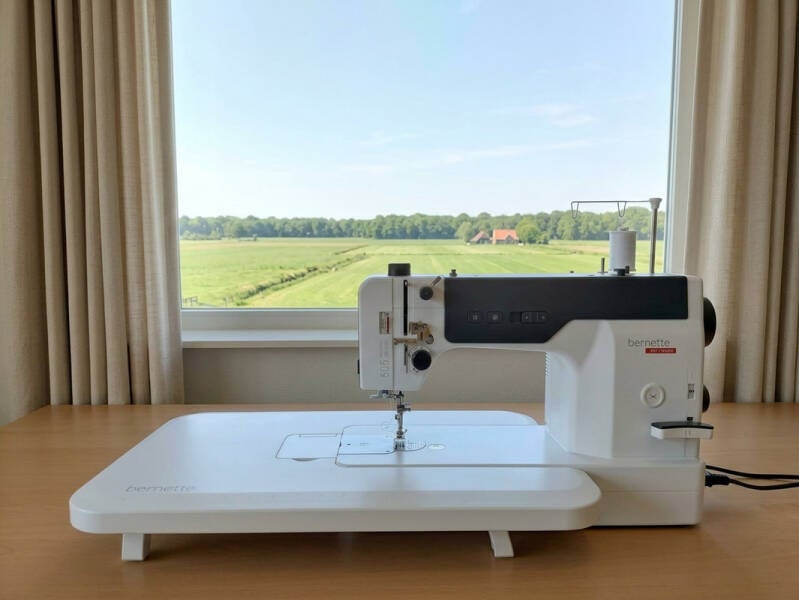
Help! My Sewing Machine Is Computerised!
Do you really need a computer to sew? Or is a good old-fashioned sewing machine all you need?
For some people, the words computerised sewing machine sound rather frightening.
"Just give me a normal sewing machine!" is a common reaction.
They imagine a machine covered in digital numbers, flashing lights and perhaps even a computer connection. "I would not know what to do with all that technology!" they think.
And what if the sewing machine suddenly goes crazy and starts doing its own thing? We have all seen enough science-fiction films to know that computers taking over the world rarely ends well for humanity. Brrr! Better not think about that!
But there is another question. If a modern sewing machine can do so much by itself, is there still any skill involved in traditional dressmaking and couture?
The answer is a definite yes!
Let's look at the differences between mechanical and computerised sewing machines.
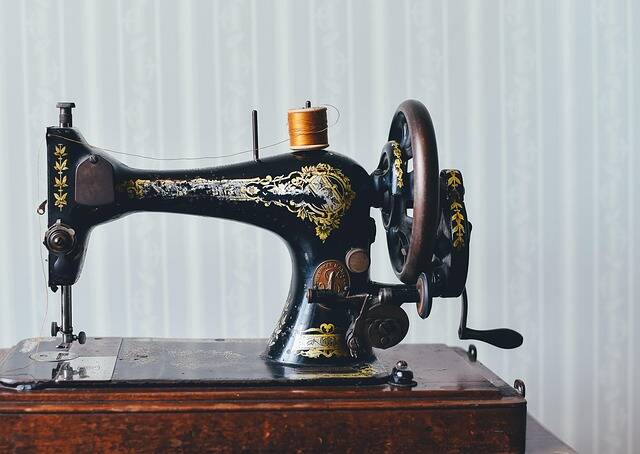
Traditional Mechanical Sewing Machines
Let's go back a few decades, when most domestic sewing machines were mechanical.
With a mechanical sewing machine, you control the settings yourself. You choose the stitch type and adjust the stitch length and width using dials, levers or other controls.
This gives you direct control over your sewing. You decide how the machine should work and make adjustments to suit your fabric and project.
The Advantages of Mechanical Sewing Machines
1. Often more affordable
Mechanical sewing machines are often less expensive than computerised models. They can be an excellent choice if you want a reliable machine without paying for extra features.
2. Simple and sturdy
Many mechanical machines have a solid, traditional design. Some models are built to handle years of regular use.
However, the quality and durability depend on the particular machine, not simply on whether it is mechanical.
3. Good for practical sewing projects
Some mechanical machines are excellent for sewing heavier materials and working on practical projects.
Think of bags, canvas, home furnishings and upholstery. A suitable machine with the right needle, thread and settings can be a valuable tool for this kind of work.
For heavy-duty sewing, it is important to choose a machine designed for the materials you want to use. Not every mechanical machine is suitable for thick fabrics.
4. Fewer choices can mean less stress
A machine with fewer stitch options can be a good choice for beginners.
Instead of spending time exploring dozens of stitches, you can concentrate on learning the basics: straight stitching, seam allowances, fabric handling and finishing your work neatly.
There is a lot to be said for starting with a simple project and achieving a beautiful result.
A successful first project can give you the confidence to try something more challenging!
5. Direct control over your stitches
Mechanical machines allow you to adjust the stitch settings yourself. This can be particularly useful when you want to experiment with different fabrics and sewing techniques.
Learning how stitch length and width affect your work is an important part of developing your sewing skills.
6. Less choice, more focus
Some sewists simply prefer a machine with a straightforward selection of stitches.
There is no need to scroll through a digital menu or wonder which of the many decorative stitches to choose. You can concentrate on the project in front of you.
Sometimes, keeping things simple is the best approach.
Computerised Sewing Machines: What Does That Actually Mean?
The name computerised sewing machine may sound complicated, but the principle is quite simple.
A computerised sewing machine uses electronic controls and a small computer to manage certain functions.
You select a stitch, and the machine sets the appropriate stitch length and width automatically when those settings are part of the selected stitch programme.
Depending on the model, you may use buttons, a dial or a touchscreen to choose your settings.
Some machines can also save personalised settings in their memory. Others offer automatic features such as needle positioning, thread cutting, speed control or buttonhole programmes.
The available functions vary from one machine to another.
In other words, a computerised sewing machine is not a mysterious robot. It is simply a sewing machine with electronic controls that can make certain tasks easier.
And no, it will not suddenly decide to make a dress without you!
The Advantages of Computerised Sewing Machines
1. More stitch options
Many computerised machines offer a wide selection of stitches, including practical utility stitches and decorative designs.
This can be useful for dressmaking, quilting, home textiles and creative sewing projects.
You can choose the stitch that best suits your fabric and the effect you want to achieve.
2. Convenient stitch settings
On many models, you simply select a stitch, and the machine automatically chooses suitable stitch settings.
You can often adjust these settings yourself when you need a different result.
This can save time and make it easier to switch between different sewing techniques.
3. Memory functions
Some computerised sewing machines allow you to save settings or create stitch combinations.
This is especially useful when you work on a project that requires the same settings repeatedly.
Depending on the machine, you may even be able to combine decorative stitches and letters.
4. Useful automatic functions
Many modern sewing machines offer features designed to make sewing more comfortable.
These may include automatic needle threading, adjustable sewing speed, a needle stop position, automatic thread cutting and one-step buttonholes.
Not every machine has all these features, so it is worth checking what a particular model offers.
5. Convenient operation
Computerised machines can make certain tasks easier, especially when you frequently change stitches or work with decorative designs.
However, a simple mechanical machine can also be very comfortable to use. The best choice depends on your sewing habits and personal preferences.
6. Plenty of room to grow
If you enjoy experimenting with fabrics, decorative stitches, quilting or more advanced sewing techniques, a computerised machine can offer many possibilities.
You do not need to use every function. You can start with the basics and discover the extra features as your skills develop.
And although some advanced machines are expensive, there are also computerised models designed for beginners and everyday sewing.
Which Sewing Machine Is Best for You?
The difference between a traditional mechanical sewing machine and a modern computerised model is significant, but neither type is automatically better than the other.
A mechanical machine can be an excellent choice if you prefer straightforward controls and enjoy adjusting your settings yourself.
A computerised machine may suit you better if you appreciate automatic settings, a wide range of stitches and convenient extra functions.
Think about the projects you enjoy making. Do you mainly sew simple garments and repair clothes? Are you passionate about quilting? Do you make bags, costumes or home accessories?
Your sewing projects, budget and personal preferences are more important than the number of buttons on your machine.
And remember: the sewing machine is a tool, not the maker.

Add comment
Comments