Sprouts are the one "vegetable garden" that works on a windowsill, in winter, in a tiny flat, with no soil at all. They are calamities -read: closed shops- preparedness treasures.
We will explain you how to store them, how to grow them, and to enjoy them. 🌱

What Sprouts Are
Sprouts are simply seeds in their first days of life: beans, peas, lentils, broccoli seeds, alfalfa, radish, sunflower — germinated in water instead of soil and eaten within three to seven days, tiny roots, shoots and all. In that brief window of growth, the seed transforms: it wakes from dormancy, activates its enzymes, and converts its stored starches and proteins into the building blocks a new plant needs.
The result is a remarkably concentrated little food — fresh greens packed with vitamins (notably vitamin C, which the dry seed barely contains), minerals, fibre, and easy-to-digest plant protein, all grown from a handful of seeds that cost not much and keep for years in a jar.
In preparedness terms, sprouts are unique: nearly every emergency food is dead, preserved and diminishing — but seeds are a living pantry, waiting patiently until the day you add water and turn your cupboard into a garden.
How to Grow Them
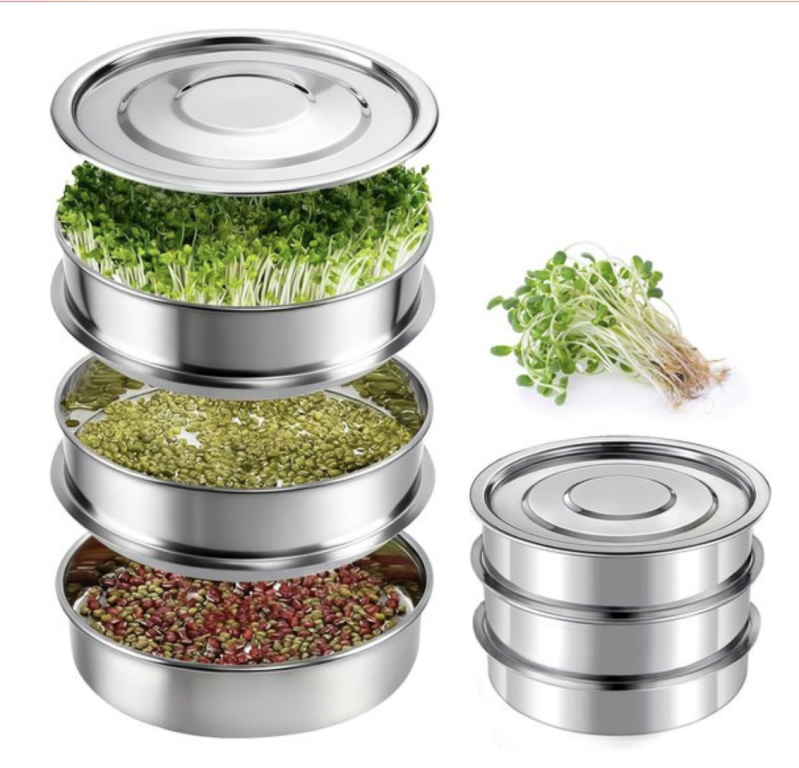
Growing sprouts asks for almost nothing: a glass jar, a piece of fine mesh or clean cloth -for ventilation-, water, and seeds meant for sprouting (sold as such, and therefore clean and tested for sprouting — this matters).
Rinse the seeds, soak them overnight in cool water, then drain. From then on, the routine is the same every day, twice or three times a day: rinse with fresh water, drain well, and leave the jar tilted upside-down or in 45 degrees at an angle, mouth down, so the water can escape and the air can circulate.
Keep the jar out of direct sunlight at room temperature, and within a day or two you will see the first white tails uncurling. Most sprouts are ready in three to six days, when the tails are a few centimetres long.
A final hour near a window gives the leaves a green blush (and a nutritional boost), a last rinse, and they go straight to the plate — in salads, on bread, in soup, or by the pinch as a fresh crunch in anything.
My Beginner's Mistake (and maybe yours if I do not warn you)
Here is my beginner's mistake: on day two or three, my sprouting seeds suddenly showed mould! With great disgust I threw away my stash and cleaned thoroughly my sprouting station. This happened again and again. I was about to give up when I realised that I was making a big mistake.
I took out my magnifier glass and what I saw were the most beautiful minuscule root hairs! No mould! I do not want to sound dramatic but I there was a cry stuck in my throat for all the baby sprouts that I had unjustly thrown away. They were healthy!
Thus, dear reader, look closer before you despair. Check whether you see root hairs — minuscule, feint white filaments that the baby roots grow to drink with, arranged like fine fur around each bright, healthy root, especially when the air is a little dry. Or real fungi. In that case, check the seeds and add more hygiene with rinsing.
There is also a simple test to find out whether you have mould or root hairs.: rinse or gently mist the seedlings. Root hairs are washed back into an almost invisible glisten and spring upright again when wet; mould does not — it stays as patches, often grey or greenish, usually with a distinct musty smell, and typically appears in spots where seeds have died and clumped together. As long as the fuzz stands proud around living roots, disappears when wetted, and smells of fresh cucumber, your sprouts are thriving.
Trust the rinse test — and enjoy the remarkable sight of a root wearing its own drinking-straws. Or use an old fashioned magnifier glass, -how I did it- and check.

Which Sprouts Should You Buy?
Of course, which sprouts you like to store is entirely up to you and your taste. That said: we have our Top Five to share:
1. Broccoli sprouts — the health champion. Small, pale-green and unassuming, broccoli sprouts are the most studied sprout in science: they contain sulforaphane, a potent plant compound that research links to antioxidant and cellular-protective effects — and sprouts can contain far more of it than full-grown broccoli. Their taste is pleasantly mustardy. Preparedness-wise they are slower to sprout and seed is pricier per gram, so treat them as your medicinal top-up rather than your bulk green.
2. Mung beans — the reliable workhorse. The classic bean sprout of Asian cooking, mung is forgiving, fast, vigorous and grows thick, crunchy, sweet sprouts even for a first-timer. Nutritionally they deliver protein, folate, potassium and fibre in abundance, and unlike most sprouts they can also be lightly cooked into stir-fries and soups, which suits conservative eaters and larger harvests. Seed is cheap, stores for years, and is available by the kilo. If you stock only one sprout, stock mung.
3. Alfalfa — the delicate daily green. Thin, grassy-sweet threads that turn a salad into a meal. Alfalfa is rich in vitamin K, vitamin C and folate, and its seeds are tiny and phenomenally economical: a tablespoon of seed becomes a full jar of greens. It stores superbly and sprouts dependably, asking nothing but rinses. Its only caution: people on blood-thinners should mind the high vitamin K.
4. Radish sprouts — the spicy pharmacy. Like broccoli, radish belongs to the brassica family, so its sprouts carry the same protective sulforaphane-type compounds, with a peppery bite that keeps winter sandwiches interesting. They are among the fastest and most vigorous sprouters (roots and all in three days), the seeds keep well, and that spiciness lifts morale — which, in a longer indoor emergency, is worth more than we think.
5. Lentils — the protein bank. Lentils sprout into plump, nutty-sweet shoots overnight — almost un-spoilable as beginners go — and they keep something the leafy sprouts don't: a solid dose of plant protein, iron and B-vitamins. In a preparedness cupboard this matters, because fresh protein is the hardest thing to grow indoors. Sprouted lentils can be eaten raw when young, or tossed into soup after a day or two of sprouting, stretching a lentil store into something fresher and more nutritious than the dry bag alone.
Sprouts are your Preparedness Vitamin Factory
This top five deliberately cover the weaknesses of indoor eating in a crisis — vitamin C (alfalfa), protein and iron (lentil, mung), protective compounds (broccoli, radish), flavour and morale (radish, mung), and sheer reliability (mung, lentil). Together they form a small, sealed, shelf-stable vitamin factory that switches on the day the water arrives.

Your Preparedness Veggie Garden That Sleeps in a Jar
Sprouts should be in your preparedness cupboard. Like the dry-toilet, the paper towels, and food, they takes care of body and spirit without losing its dignity. Sprouts and mung beans wait in sealed jars until water wakes them into a fresh green vegetable no shop can sell you.
"Preparedness is not a bunker of tins eaten grimly by candlelight
— it is a quiet, well-kept household, ready to carry on".
Seeds that sprout are the purest expression of that idea: a living store, awake when everything else sleeps, needing nothing but water, a jar, and a twice-daily rinse that takes less time than making tea. When the shops are shut, the power is out, or the world is simply being difficult, the windowsill will still be producing — vitamin C in January, protein in a power cut, pepperiness on plain bread. Preparedness, after all, should taste pleasant — and this time, it should taste green.
A Note on Buying: Choose Organic Sprouting Seeds
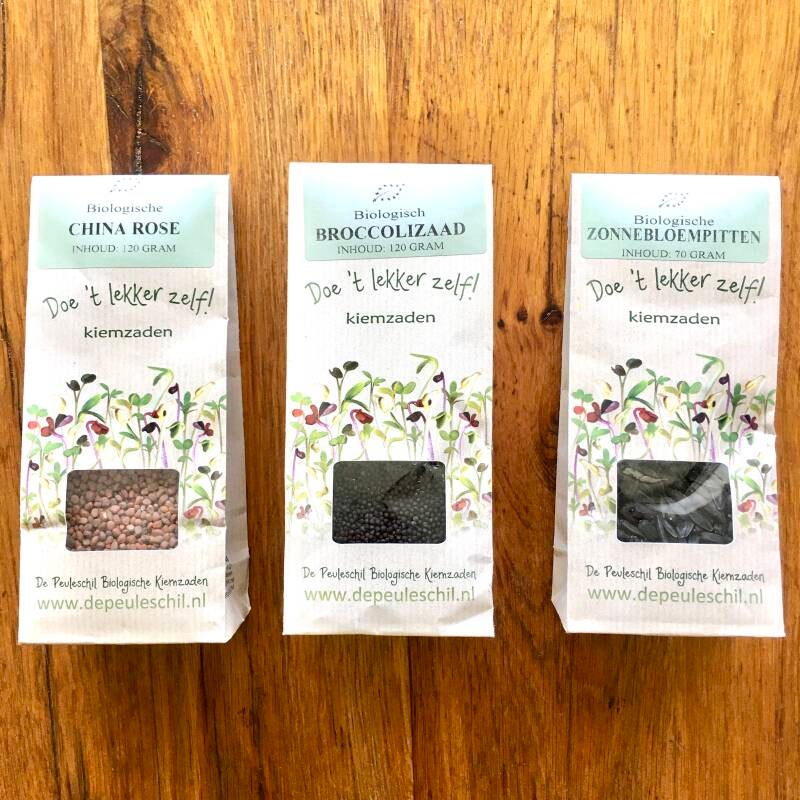
One last word, and it matters more here than anywhere else in the cupboard: buy your seeds as sprouting seeds, and buy them ecological (organic) wherever you can. This helps not only ecological companies and your health.
Seeds sold for sprouting are grown, cleaned, and tested specifically to be eaten raw as sprouts — table seeds or garden seeds, however cheap, may be dressed with fungicides or dusts you never want to rinse into your lunch.
Organic sprouting seed goes further: it is grown without synthetic pesticides, which the sprouting process then multiplies into concentrated greens — so what you avoid in the seed, you avoid in every harvest.
Ecological seed is a little more expensive, true; but a 200-gram bag still fills a dozen jars, and the sprouts it gives are cleaner, more vital, and worthy of the food of gods and survivors alike.
Store your seed in a sealed jar, dark and cool, label it with the year, and rotate it as you do everything else — by using it, joyfully, in ordinary times.
Sprouting seeds should be bought as sprouting seeds (they're tested for bacteria like salmonella), and the rinse-twice-daily routine is the food-safety routine — hygiene is what keeps sprouts safe. Sprouts are famously the one "raw" food with a caution for vulnerable groups, so a short sentence on this would make the post genuinely responsible
My Second Beginners Mistake: Colloidal Silver
To remedy my beginner's mistake, I was advised to spray with colloidal silver. It was the time when colloidal silver was recommed for everything: for a common cold, guinea pig nail infection, anything.... Colloidal silver was marketed as a natural antimicrobial, and the advice you received is well-meant — but better leave it out of your sprouting practice, for three reasons:
- The evidence isn't there. Silver has genuine antimicrobial properties in laboratory and medical applications (wound dressings, for instance), but the dilute colloidal silver sold in shops has no proven benefit for food-safety use. No food-safety authority endorses it: the EFSA and the US FDA both consider colloidal silver products unfit for health claims, and the FDA has specifically warned against ingesting it.
- It addresses the wrong end of the problem. Mould and bacterial issues in sprouting come from seed quality, warmth, and — above all — standing water and poor air circulation. A silver rinse can't fix a jar that doesn't drain. The daily rinse-drain-tilt routine and a well-cleaned jar do the actual work; anything added to the water is decoration.
- Ingested silver accumulates. Regular consumption can, over years, cause argyria — a permanent bluish-grey discolouration of the skin. Rare, and you'd never get there from a few rinses, but since sprouts are eaten, and the rinses stay on the food, the precautionary principle applies: why introduce a persistent heavy metal into a system whose whole point is clean fresh food?
Sprouting on Tropical Summer Days : yes or no?
Anyone who has sprouted through a genuinely hot, humid stretch of summer knows the truth of it: heat and sprouts are uneasy partners.
I actually stopped sprouting after the second heatwave, the summer of 2026. After, -I report happily- my daughter to ask: shall we begin with sprouting again?
Warmth accelerates everything — germination, growth, and, alas, the microbes waiting alongside. A batch that stays fresh for days in a cool Dutch kitchen may turn within one or two in the tropics, not because you did anything wrong, but because the sprout and the mould are both living on fast-forward.
WHAT TO DO?
1. The remedy is to live at the same tempo: rinse extra (3-4 times per day), with the coolest water available — the rinse is as much a cooling bath as a drink.
2. Give the jar its airiest, shadiest spot; heat plus direct sun plus a wet jar is a mould festival.
3. Sow smaller batches, so each jar is eaten while young, and harvest earlier than you would in cool weather — a two-day sprout is fine if a five-day sprout never gets the chance.
4. Once a batch is ready, treat it as the fresh vegetable it is: into the refrigerator, or eaten the same day.
In hot climates the sprout cupboard doesn't fail; it simply keeps a shorter life-span — thus: more rinses, smaller jars, younger harvests, but still, plate after plate of fresh greens. Maybe I shouldn't have stopped. I will test this summer 2027.
WHAT SHOULD YOU DO NOW?
I think one should always learn for mistakes that are made by others and I have offered -for free- mine. Do not throw away sprouts before checking root hairs versus fungi. And secondly: do not use expensive colloidal silver. Just be very hygienic. Rinse, rinse and rinse 3 times a day.
Now I like to teach you the most important lesson:
Learn Spouting Now, in Calamity Free Times
Begin with sprouting now, in calm times, when a failed jar is merely a compost moment and not a small crisis.
Sprouting is a skill, and like every skill it rewards practice — not reading about it, but doing it.
Learning today means discovering how your kitchen behaves: where the air circulates, which shelf holds the right temperature, how fast the water drains from your jar, your mesh, with your tap.
It means building the small rhythm of the twice-daily rinse until it lives in your hands, as automatic as making tea. It means making your beginners' mistakes — the overfull jar, the suspicion of root hairs, the batch forgotten during a busy day — while the shops are open and the stakes are charmingly low.
And it means, above all, the happy taste test: letting your family sample their way through alfalfa, radish, mung and broccoli, and finding out which sprouts earn their place on your table and which merely earn politeness. Because a pantry is only truly prepared if it is stocked with things your household will actually eat — in a difficult week, familiar flavours are worth their weight in provisions.
"So start now, start small, start badly if you must. The seeds will forgive you; that is their nature. And when a real emergency ever does close the shops, you will not be learning sprouting — you will simply be keeping a garden you have known for years".
Sprouts are awesome preparedness friends
Good luck! You will love all of it: selecting the seeds, keeping your sprouting station happy, and their taste. You will happily buy a tin for a few bags of sprouts for your preparedness cabinet. But do not forget about them: refresh them when they are close to their expiry date.
~Your Positive Sprouting Preparedness Team ~
Paula Kuitenbrouwer
Marga van der Vet
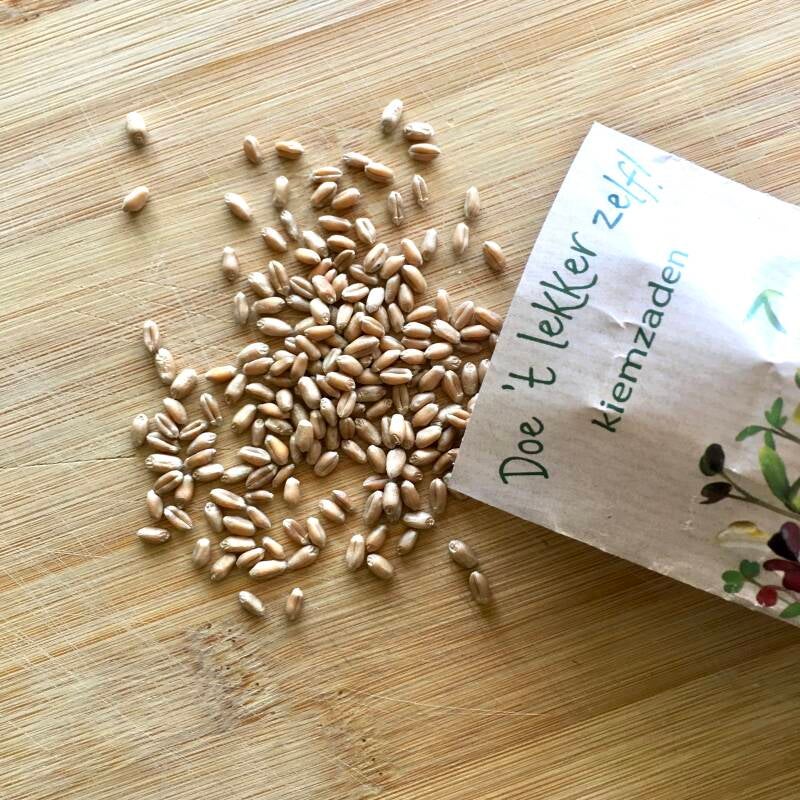
P.S. I sprout wheat grass for our guinea pig. I wait till they are 5 to 7 cm long. According to my guinea pig sprouts are bliss.
P.S. Should you kindly use the links we provide, we will receive a minuscule affiliate commissions which we use to keep up this website. The products on our photos are stock photos and our own home. We have no relations with the seed companies; they are just our fav sprout choices.
Add comment
Comments