
Inkjet Printed Fabrics – When a Print Becomes a Work of Art
I'll admit something first: I have never been a huge fan of printed fabrics.
Give me beautiful linen, luxurious silk, soft wool or crisp cotton, and I'm perfectly happy. I have always believed that a high-quality fabric doesn't need a busy print to make an impression. The texture, the drape and the craftsmanship should speak for themselves.
Yet every now and then, a fabric comes along that completely changes my mind.
Some modern inkjet prints are so beautifully detailed that they look more like paintings than textiles. They don't overpower a handmade creation—they enhance it.
One of my favourite ways to use digitally printed fabric is on the reverse side of a quilt or blanket. The front may have taken dozens, sometimes hundreds, of hours to create with patchwork, embroidery and quilting. A beautiful printed backing gives the quilt a completely different personality. It becomes reversible, allowing you to enjoy two different looks while occasionally giving the handcrafted front a well-deserved rest.
That, to me, is when a print truly adds something.
How Fabrics Are Traditionally Printed
For many decades, most printed fabrics have been produced using rotary screen printing.
This technique works with engraved printing screens or rollers. Every individual colour in the design requires its own screen. A floral pattern with seven different colours therefore needs seven separate printing stages, one after another.
It is an efficient and economical process for large production runs. Once the screens have been made, thousands of metres can be printed quickly, making it ideal for mass production.
The downside is that creating the screens is expensive. Fine colour gradients, photographic images and tiny details are also more difficult to reproduce than with modern digital technology.
What Makes Inkjet Printing Different?
Digital textile printing—often called inkjet printing—works much like the printer you may have at home, although on a far more sophisticated industrial scale.
Instead of separate printing screens, the design is printed directly onto the fabric using microscopic droplets of textile ink. This allows extraordinary precision, smooth colour transitions and incredibly sharp details.
Botanical illustrations, watercolour paintings, antique maps and even photographic images can be reproduced with remarkable accuracy. Some prints create such convincing depth that they almost appear three-dimensional, although the fabric itself naturally remains perfectly flat.
Because there are no expensive printing screens to manufacture, designers can also produce much smaller quantities. This makes digital printing especially attractive for boutique collections, independent designers and artisan textile brands.
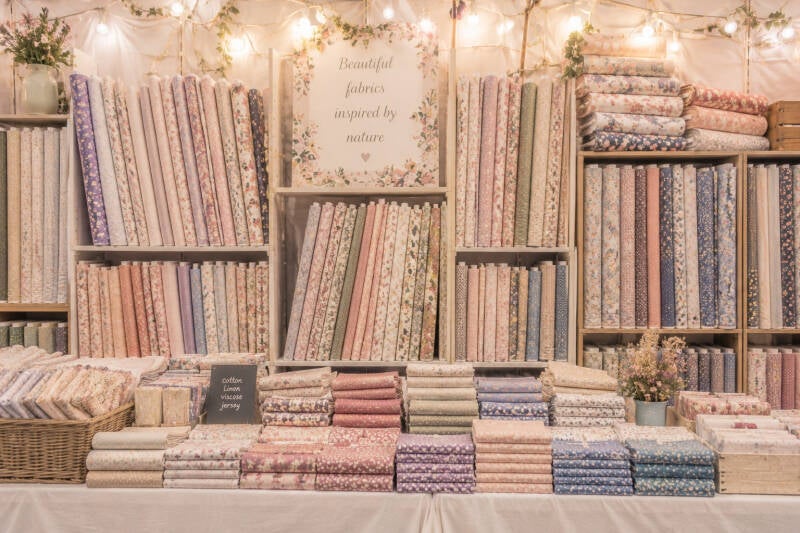
A Better Choice for Smaller Collections
Another advantage is flexibility. Traditional printing is most economical when producing very large quantities of fabric. Digital printing makes much smaller production runs financially possible, helping to reduce overproduction and unnecessary waste.
Modern digital printing often uses less water and applies ink only where it is needed. While no textile printing process can be called completely environmentally friendly, digital printing is generally considered a more resource-efficient option than many traditional large-scale printing methods.
For companies producing thoughtful, carefully selected collections rather than thousands upon thousands of metres, this is a welcome development.
A Little Journey Through Textile History
As someone who loves historical textiles, I also find it fascinating how far printing technology has come.
Centuries ago, many of the richly decorated fabrics we admire today weren't printed at all—they were woven.
Magnificent damasks, brocades and Gobelin textiles achieved their intricate patterns by weaving coloured threads together rather than applying ink to the surface. These luxurious fabrics decorated palace walls as tapestries, covered furniture, and were transformed into elegant gowns, heavy coats and ceremonial clothing.
The craftsmanship was extraordinary, but so were the costs. Creating those woven masterpieces required countless hours at the loom.
Today, digital printing makes it possible to recreate the beauty of antique textiles with astonishing accuracy. Historic floral motifs, medieval ornamentation, Renaissance patterns and even woven tapestry designs can now be printed onto cotton, linen or velvet, making these timeless designs accessible to many more makers.
Of course, a print will never replace the texture and depth of a genuine woven Gobelin or brocade—but it allows us to celebrate those historic designs in new and creative ways.
Will I Ever Stop Loving Plain Fabrics?
Probably not. Natural fabrics without prints will always have my heart.
But when a digital print resembles a painting, tells a story or adds an extra layer of beauty to a handmade creation, I am more than happy to make an exception.
Like every material, it isn't about whether a fabric is printed or plain.
It's about choosing the right fabric for the right project. And sometimes, that perfect print transforms a handmade creation into a true work of textile art.
Marga van der Vet
~Needle artist~
Our Items with a bit of print:
-
 Modern Masculine Interior Piece €255.00 FREE shipping
 -
 Botanical Quilt Throw €295.00 FREE shipping
 -
 Caribbean Blue Cotton Quilt €135.00

More Blogs about fabrics and colors:


Add comment
Comments