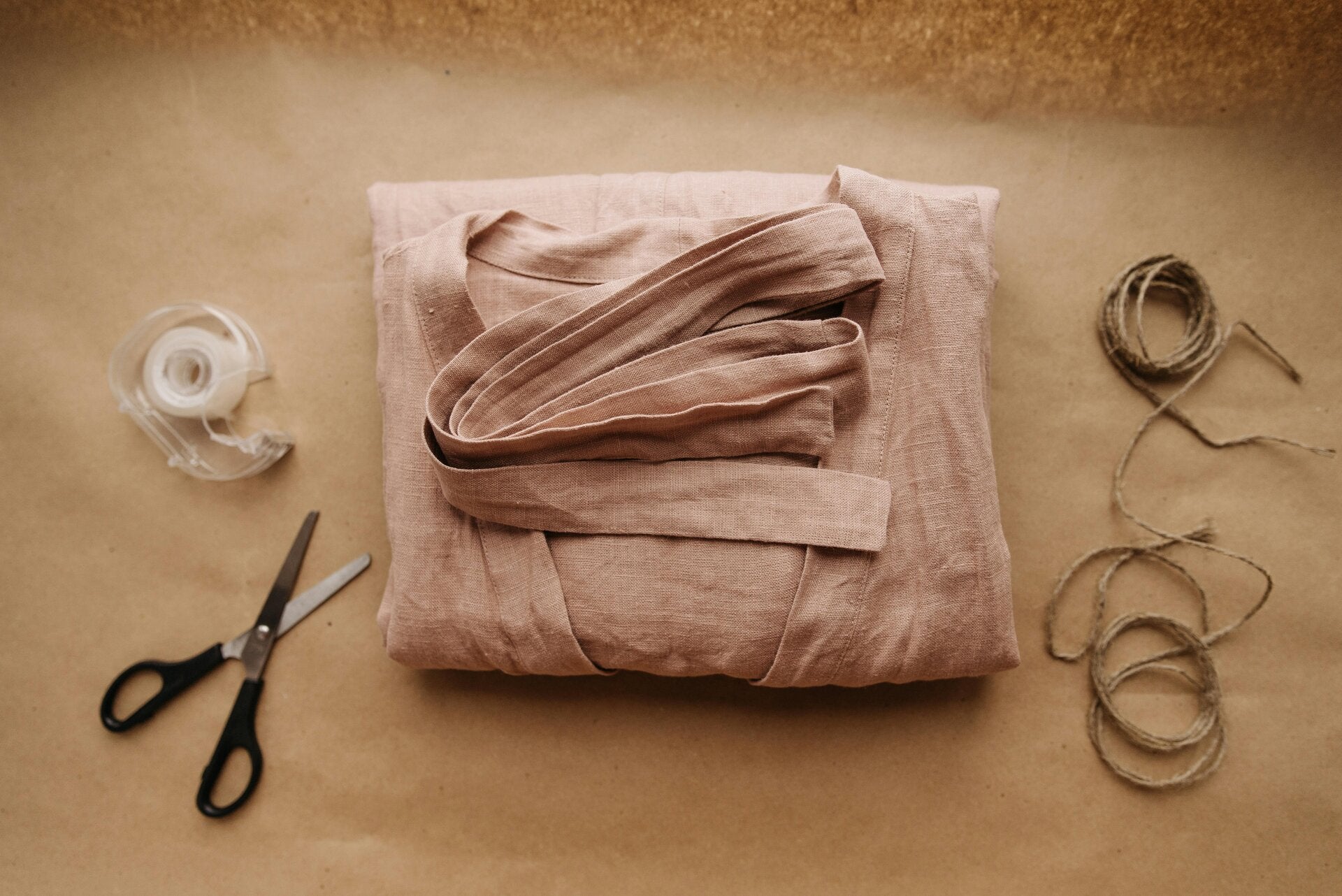
How to Choose, Cut and Sew Fabric
Choosing fabric is one of the most important parts of any sewing project.
It is very easy to fall in love with a beautiful colour, an interesting print or a luxurious texture. But fabric is much more than colour and appearance. Every fabric has its own character.
Some fabrics are firm and stable. Others are soft and flowing. Some are easy to cut and sew, while others move, stretch, fray or slip away from your sewing machine.
This does not mean that a difficult fabric is a bad fabric. Quite the opposite. Some of the most beautiful fabrics simply need a little more care.
Whether you want to make a linen cushion, a quilt, a table runner, a decorative cover or a garment, understanding your fabric will make your sewing much easier.
Why does fabric choice matter?
A successful sewing project is usually a combination of three things:
The pattern, your sewing experience, and the fabric.
A sewing pattern may recommend a particular type of fabric. You can often change the colour, print or even the exact fabric, but the weight and behaviour of the fabric are important.
For example, a pattern designed for firm cotton may not work well with a very soft and flowing fabric.
The same is true when making home accessories.
A cushion cover can be made from many different fabrics, but the result will be very different if you use linen, velvet, lightweight cotton or heavy jacquard.
This is why it is useful to ask not only:
“Do I like this fabric?”
but also:
“Is this the right fabric for my project?”
Start by looking at the fabric properties
When buying fabric, especially online, look carefully at the description.
Ask yourself:
-
Is the fabric light, medium or heavy?
-
Is it woven or knitted?
-
Does it stretch?
-
Is it firm or soft?
-
Does it drape or hold its shape?
-
Does it fray easily?
-
Does it have a nap or direction?
-
Is the surface smooth, textured or raised?
-
Can it be washed easily?
-
Is it suitable for the item I want to make?
These questions are often more important than the colour.
A beautiful fabric that is unsuitable for your project can become frustrating very quickly.
-
 Minimalist Cotton Linen Throw €148.00


Linen: beautiful, natural and practical
Linen is one of our favourite fabrics for home decoration.
It is natural, breathable and strong. It also becomes softer and more beautiful with use. Linen works wonderfully for cushion covers, table runners, curtains, bags, napkins and decorative textiles.
Linen is generally pleasant to sew because it is stable and does not stretch like a knitted fabric.
However, linen does have one characteristic you should know about: it wrinkles.
This is not a fault. It is part of the natural beauty of linen.
For a relaxed home, a little wrinkling can actually be part of the charm.
Linen can also fray at the cut edges, so finish your seams properly. If you are making a cushion cover or another item that will be used often, a neat seam finish will make the project much more durable.
-
 Caribbean Blue Cotton Quilt €135.00


Cotton: one of the easiest fabrics to begin with
Cotton is a wonderful fabric for beginners.
A medium-weight woven cotton is usually stable, easy to cut and easy to sew. It is therefore an excellent choice for cushions, quilts, table decorations, bags and many other home accessories.
There are, however, many different types of cotton.
A light cotton can behave very differently from heavy canvas.
So when someone says “cotton is easy to sew”, remember that cotton is a whole family of fabrics.
Canvas and heavy cotton
Heavy cotton, canvas and similar sturdy fabrics are excellent when you need strength.
They are particularly useful for bags, storage baskets, sturdy cushions, aprons and home accessories that need to withstand a lot of use.
The difficulty is not usually cutting the fabric. It is the thickness.
Several layers of canvas can become very thick, especially at seams and corners. Your sewing machine therefore needs to be able to handle the fabric.
Use a suitable needle and do not force the fabric through the machine.
Let the machine feed the fabric at its own speed.
-
 Botanical Quilt Throw €295.00 FREE shipping


Velvet: beautiful but directional
Velvet is one of those fabrics that can look absolutely stunning but needs careful handling.
The surface has a pile, sometimes called a nap. When you stroke velvet in different directions, the surface looks lighter or darker.
This means that all your pattern pieces must normally be cut in the same direction.
This is particularly important when making cushions, bags or decorative pieces.
Imagine making two cushions from the same velvet, but cutting one piece with the pile going up and the other with the pile going down. They may look like two slightly different colours.
Always check the direction of the pile before cutting.
Velvet can also move while sewing, so take your time. Pin carefully and, for important seams, consider basting by hand first.
The extra few minutes can save a lot of frustration.
Bouclé: wonderful texture, loose threads
Bouclé is famous for its beautiful, irregular surface.
It can be made from different fibres and can have a very loose, textured construction. This makes it wonderful for cushions, decorative textiles, jackets and other projects where texture is important.
Bouclé can also fray. Sometimes it seems to fray simply because you looked at it!
If you are working with a loose bouclé, handle the fabric carefully and avoid unnecessary cutting. Finish the seams well and consider using a lining or backing when appropriate.
The beautiful texture is worth the extra care.
-
 Couture-Style Artisan Cushion €245.00
 -
 Patchwork Silk & Ginkgo Fabrics €325.00 FREE shipping
Jacquard and brocade: look at the pattern before cutting
Jacquard and brocade fabrics often have beautiful woven patterns.
The design is part of the fabric rather than simply printed on the surface. This gives these fabrics their rich and luxurious appearance.
But there is something important to remember:
The pattern may need to match.
If you are making a cushion, for example, you may want the central motif to be positioned carefully.
You may also need more fabric than you first expected because you cannot always use every small piece efficiently.
This is one of the reasons why buying a little extra fabric is a good idea when working with patterned textiles.
Silk and satin: not the same thing
Silk is a natural fibre, while satin describes a type of weave.
This is an important distinction.
Silk can be woven into satin, but satin can also be made from other fibres.
Smooth, shiny fabrics can be difficult to control because they move easily while cutting and sewing.
If you are making your first cushion cover, a stable linen or cotton may be much easier.
If you love the look of silk, make a small test piece first. It is always better to discover how the fabric behaves before cutting your main project.
Chiffon, voile and other very light fabrics
Very lightweight fabrics can be difficult because they have almost no weight of their own.
They can move while cutting and may be pulled into the sewing machine during stitching.
For these fabrics, use fine needles and fine pins. Cut carefully and avoid handling the fabric more than necessary.
These fabrics are beautiful for delicate decorative work, but they are not always the best choice for a beginner.
Stretch fabrics
Stretch fabrics are another category that requires some knowledge.
A normal woven fabric and a knitted stretch fabric behave very differently.
If your project needs stretch, you cannot simply replace the stretch fabric with a non-stretch fabric.
The fabric must be able to move with the design.
For home decoration, however, many projects do not need stretch at all. A stable woven linen or cotton is often a much easier and more durable choice for cushions and other decorative items.
Thick fabrics: check your sewing machine
When working with thick fabrics, the fabric itself is not necessarily the problem.
The problem can be the number of layers.
A cushion may look simple, but seams, piping, corners, zippers and several layers of fabric can quickly become surprisingly thick.
Before starting, make a small test.
Sew through the same number of layers you will have in the real project.
If your machine struggles, do not simply use more force. Try a suitable needle, a longer stitch length or a different construction method.
And remember: sometimes hand sewing is the best solution.
There is no rule saying that everything has to be done by machine.
-
 Scandinavian Throw Blanket €165.00
 -
 Handcrafted Cranes Wedding Gift €165.00


Always make a sample
This is perhaps the best advice we can give.
Make a small sample before starting the real project.
You do not need much fabric.
Test:
-
the sewing machine needle
-
the thread
-
the stitch length
-
the seam allowance
-
the fabric tension
-
how the fabric behaves when pressed
-
how the fabric behaves after washing, if washing is possible
This is especially important when making something that will be used regularly.
A small test piece can save an entire afternoon of work.
Buy a little extra fabric
When working with an easy, plain fabric, it is sometimes possible to calculate the fabric very precisely.
With more complicated fabrics, this can be risky.
You may need extra fabric because of:
-
a large pattern
-
a directional print
-
velvet pile
-
matching motifs
-
fraying
-
mistakes during cutting
-
shrinkage
Buying a little extra is usually much cheaper than discovering that you are five centimetres short after cutting your last piece.
Fabric samples are your friends
If you are buying fabric online, a sample is extremely useful.
A photograph cannot always show you how a fabric feels.
Is it soft or firm?
Is it heavy or light?
Does it have a rough or smooth surface?
Is the colour exactly what you expected?
Does the fabric have enough body for your project?
A small sample can answer many of these questions.
This is also why we love working with natural fabrics. Linen, cotton and wool all have their own character, and part of the pleasure of handmade work is getting to know these materials.
What fabric should you choose for a cushion?
If you are new to sewing and want to make a cushion, we recommend starting with a stable woven fabric.
Good choices include:
Medium-weight linen – natural, elegant and beautiful for everyday cushions.
Cotton – easy to sew and available in many colours and patterns.
Linen-cotton blends – often combine the character of linen with some of the easy handling of cotton.
Jacquard – excellent when you want something more decorative and luxurious.
Velvet – beautiful for a richer look, but remember the pile and direction.
Heavy cotton or canvas – a good choice for sturdy, practical cushions.
The best choice depends on the style you want and how the cushion will be used.
A decorative cushion that is rarely touched can use a very different fabric from a cushion that lives on the favourite chair and is used every day.
What about buying a handmade cushion?
Of course, there is another option.
You do not always have to make everything yourself.
One of the pleasures of handmade products is that someone else has already done the difficult work: choosing the fabric, cutting it correctly, sewing the seams and finishing the item carefully.
When you buy a handmade cushion or another textile item, knowing a little about fabrics helps you understand why the item looks and feels the way it does.
A linen cushion may have a natural, slightly relaxed appearance.
A jacquard cushion may feel more decorative and formal.
A velvet cushion may have a deep, changing colour because of the pile.
These differences are part of the fabric's personality.
Difficult does not mean bad
This is perhaps the most important lesson.
A difficult fabric is not necessarily a poor fabric.
Sometimes it is difficult because it is delicate.
Sometimes it frays because it has a beautiful loose structure.
Sometimes it moves because it is soft and luxurious.
Sometimes it is thick because it is strong.
The trick is to understand what the fabric wants.
Give it the right needle, the right stitch, enough time and a little patience.
And if you are still learning, start with fabrics that are stable and forgiving. There is nothing wrong with beginning with a lovely piece of linen or cotton and moving on to more complicated fabrics later.
Sewing should be enjoyable.
A beautiful fabric deserves to be treated with care, and a good sewing project should give you pleasure from the first cut to the final stitch.
At Handmade Luxury Home, we believe that handmade textiles become even more special when you understand the materials behind them.
Choose carefully, test first, take your time – and let the fabric be part of the creative process.
Marga van der Vet
~who knows how to handle these tough fabrics!~
Add comment
Comments