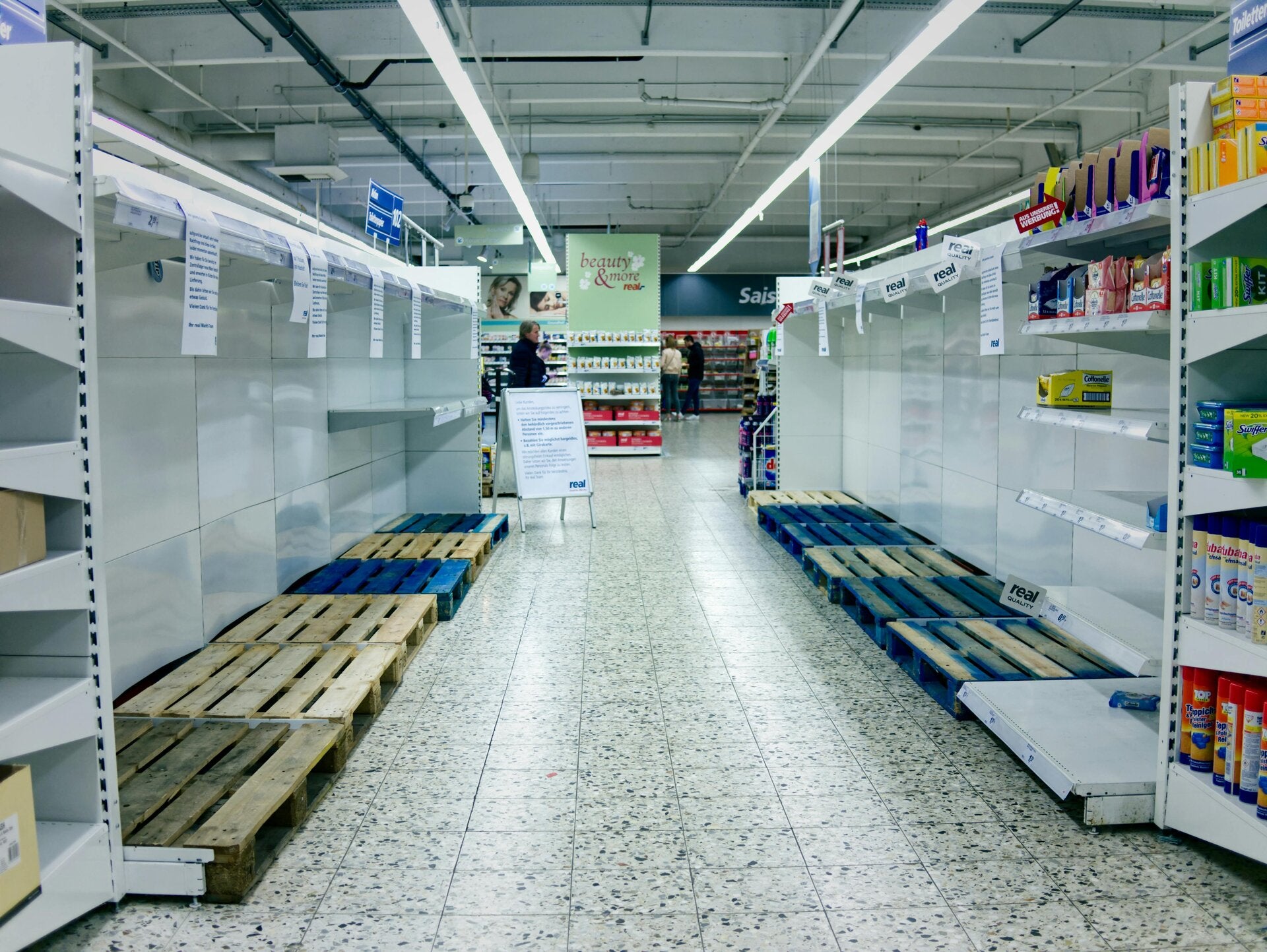
No panic!
Smart alternatives for empty supermarket shelves: farm shops, museum cafés, garden centres, bartering and more.
Calm tips from The Prepared Home.
Let us give you an emergency list:
-
Take care of your vulnerable neighbours, the elderly, and those who are ill. In other words: those who haven't prepped.
-
Be creative... we can't stress enough how a creative mind helps.
-
Check your own shelves and make a plan.
-
Shop and eat at unexpected places.
-
Buy or bring home a few items for those who are vulnerable: those without strong health, transport, and money.
What are those unexpected places?
Farm shops — often still stocked when supermarkets run empty.
Outdoor sports and hiking shops — camping food keeps for years and is ready to eat.
Shops that happen to sell some food — the Dutch HEMA, for instance. Even Søstrene Grene has muffin mixes and more. This takes the pressure off the larger food stores, and it also allows them to get their logistics going again.
Abroad... if you live close to a border. For instance, German pharmacists sell food.
Go out eating! Order your breakfast, lunch and dinner at a hotel, restaurant, lunchroom or tea room. Show understanding for adjustments to their menu — expect shorter menus and be kind about it. Think: IKEA, HEMA and other shop canteens. Perhaps your furniture store has a café?
The café of your local garden centre — do check the opening hours; many close on Mondays.
Museum cafés — calm, stylish, unhurried.
Hospital and university cafeterias — cheap, fast, and often surprisingly good.
Library canteens — students know this one.
Train station, airport cafés and tank stations — nobody thinks of them as lunch addresses, but they are.
Ferry terminals — a mini-cruise with your sandwich.
And one thing we would like to add: remember that Dutch tap water is excellent and perfectly safe.
SHOULD YOU HAVE PREPPED...
In the case you have prepped, now might be the time to take whatever you need from your preparedness cabinet.
As soon as the supermarkets are back on track again, gradually restock your supplies. This refreshes your preparedness cabinet, which is a good thing every now and then.
Later, when all is back to normal, relist your items by expiry date.
SHOULD YOU HAVE NOT PREPPED: THE ART OF BARTERING
Bartering is the direct exchange of goods or services between two or more parties, without using money, cash or credit. Talk with your neighbours, family or friends and exchange what you have stored in excess and they can use, and vice versa. Some of us have chickens. Some have walnuts. Some may have apples ready to pick.
Use your neighbourhood Signal or WhatsApp group to check in on those who need help.
NEXT TIME
It is October 2026, and in the Netherlands, Belgium, and France there are logistic hacks on supermarkets. We do not like to imagine more hacks come together: for instance that of energy supplies, logistic systems, and water distribution. As this is almost too big to imagine but possible, we kindly and positively urge you to set up a preparedness cabinet or a small 'what in case' supply box.
Next time, then -when there are logistic troubles-, you will have a lovely preparedness cabinet.
We offer you some help!
Have a look at our blogs that help you get that cabinet started:
1. Chocolate, Your favourite Cupboard Stash
2. Sprouts are Preparedness Treasures
4. Gluten-free Preparedness...it is doable
5. Preparing for sewage outage
6. Which Food to Store in Your Preparedness Cabinet
8. Prep Paper Towels for Personal Hygiene
9. Where and How to start Prepping?
10. Self Reliance: the New Luxury
Don't worry: try to transform your worries into positive actions. Worries cannot survive being turned into something useful.
~Your Positive Preparedness Team ~
Add comment
Comments