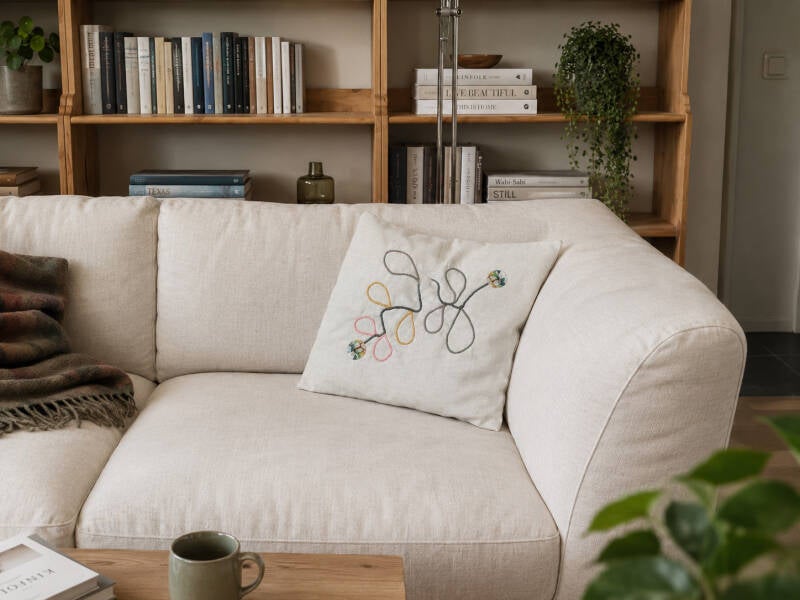
There is something I never expected to think about when I started Handmade Luxury Home: how will our interiors change if Northern Europe keeps getting warmer? We usually think about climate change and our homes in terms of insulation, windows, roofs, air conditioning and other technical solutions. That is an important subject, and we will talk about the building side of things in another blog. But what about the inside of our homes? How will we decorate, furnish and use our homes when a typical Northern European summer is no longer quite so typical?
This summer made me think about it much more than before. For me, the heat is not simply uncomfortable. As someone with a heart condition, very warm days can be difficult. And Paula does not cope well with extreme heat either. There were days when going outside simply did not feel like an option.
While other people were sitting on terraces, going to the beach or enjoying a summer afternoon outside, we sometimes felt more like vampires hiding from the sun. And perhaps that is not even such a strange feeling anymore. I sometimes wonder how many people who look as if they are enjoying the summer are actually thinking, "It is really too hot today."
From cosy winter homes to cool summer homes
Northern European interiors have traditionally been designed around keeping us warm.
We love thick curtains, soft blankets, cushions, carpets, upholstered furniture and cosy rooms. We decorate our homes to make winter feel pleasant. And I absolutely understand that. I love a cosy interior myself.
But perhaps we will have to think about the opposite as well. Maybe, in the future, our homes will have a "summer setting" and a "winter setting".
Instead of putting away the winter blankets and simply opening all the windows, we may start changing our interiors more deliberately when summer arrives. And this does not have to mean turning our homes into cold, minimalist spaces. Natural materials may actually become even more important.
-
 Minimalist Cotton Linen Throw €148.00
 -
 Botanical Quilt Throw €295.00 FREE shipping


Linen could become one of our best summer friends
Linen is already one of my favourite materials.
It feels natural, looks beautiful and has that slightly relaxed appearance that makes a room feel comfortable without looking untidy.
I can imagine linen becoming even more popular in warmer Northern European homes. Linen cushions could replace heavier winter fabrics during the summer months. Lightweight linen and cotton throws could be used instead of thick wool blankets. And a beautiful natural fabric can make a room feel cool and fresh without making it feel empty. Perhaps we will even start choosing different cushions and throws for different seasons in the same way that we already change our bedding.
A warm woollen throw for January. A light cotton or linen throw for July.
It is a very old-fashioned idea in a way. People have always adapted their homes to the seasons. Perhaps we simply need to rediscover that habit.
A summer cover for the sofa?
This is something I have been thinking about quite a lot. Leather sofas and heavy upholstered chairs can become surprisingly unpleasant on very hot days. The solution does not necessarily have to be replacing them.
What about a beautiful, loose linen or cotton cover that can be placed over a sofa or chair during the hottest months? It would protect the furniture, feel much nicer against the skin and could be washed easily. It could even become part of the interior rather than something that looks like a practical cover. I rather like that idea. A beautiful natural fabric, casually draped over a chair, can look much more inviting than a perfectly styled sofa that nobody wants to sit on because it is too hot.
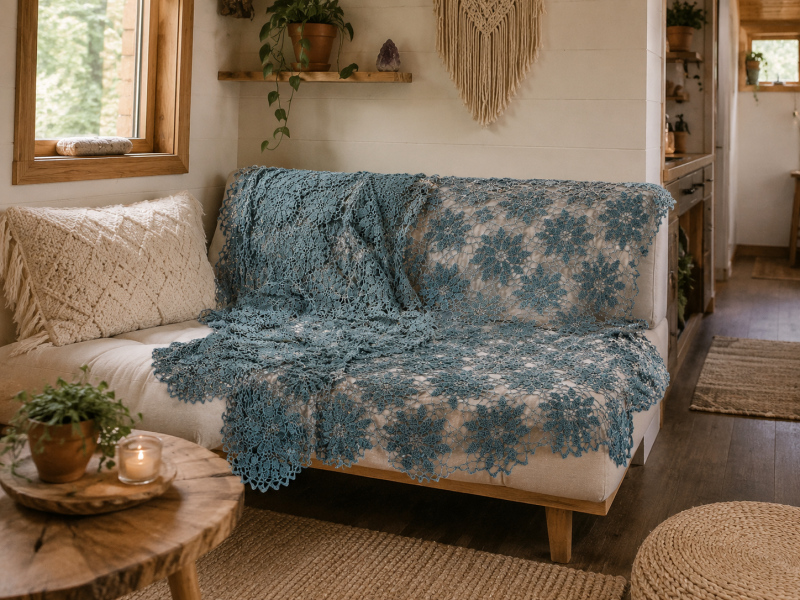
Curtains may have a new job
We usually think of curtains as decoration, privacy or a way to keep winter drafts out.
Perhaps summer curtains will become just as important. I can imagine using an additional lightweight curtain between rooms, particularly in rooms that receive a lot of sunlight. Not necessarily a heavy blackout curtain. A beautiful linen or cotton curtain could create a softer barrier between a sunny room and a cooler part of the house. It could also create a lovely Mediterranean feeling.
And perhaps that is another change we will see: Northern European interiors borrowing more ideas from countries that have lived with hot summers for centuries. Shutters, light curtains, natural fabrics, pale colours, tiled floors, shaded sitting areas and rooms designed for afternoon rest are not new ideas at all. They are traditional ways of dealing with heat. Perhaps we simply forgot how useful they can be.
The return of the afternoon siesta?
This may sound a little romantic, but I wonder if our daily rhythm will change too.
For centuries, people in warmer countries have understood that the hottest part of the day is not necessarily the best time to be busy. Perhaps Northern Europe will slowly learn the same lesson. Instead of sitting outside in the hottest part of the afternoon, we may retreat indoors for a few hours. And if we do, our interiors need to make that pleasant.
- A comfortable chair.
- A lightweight cotton throw.
- A linen cushion.
- A good book.
- Soft light.
And perhaps a beautiful piece of art to look at.
Which brings me to another idea I rather like.
Bringing nature indoors
When it is too hot to spend much time outside, I think we naturally start looking for a connection with nature indoors.
At Handmade Luxury Home, we love drawings and artwork inspired by nature. I think these could become even more meaningful in the future. A botanical drawing, a delicate illustration of wild flowers, leaves, birds or a woodland scene can bring something of the outside world into a room. It does not replace being outside, of course.
But on a day when the sun is too strong and you are much happier staying indoors, a beautiful natural image can make a room feel alive. It is a small thing, but interiors are often about small things.
-
 Family of Wrens €77.00


Even our drinks may influence our interiors
Here is a much smaller example, but one that makes me smile.
Iced drinks are becoming a part of everyday life for many of us. Iced coffee, iced tea and, of course, iced matcha. And if you have ever tried to enjoy an iced drink on a very warm day, you know that condensation can become a little annoying. This is where something as simple as a handmade cup warmer can suddenly make sense. Not to keep your drink warm, of course!
It protects your hands, helps deal with condensation and makes a cold drink more comfortable to hold. It is a tiny example of something I think we will see more often: adapting familiar household objects to warmer weather rather than completely changing the way we live.
Bedrooms may become much more important
I also think we may start paying more attention to our bedrooms during summer.
Heavy duvets and synthetic bedding can feel horrible when the temperature rises. Natural cotton and linen sheets are much more appealing. Perhaps summer bedding will become as normal as winter bedding, with different layers and fabrics depending on the season. A light cotton sheet. A linen cover. A thin blanket for cooler nights. And nothing more when the night is warm.
Again, there is nothing particularly modern about this. Our grandparents often understood seasonal bedding much better than we do.
Perhaps we will create "cool rooms"
Another possibility is that we will stop expecting every room in the house to have exactly the same function.
In summer, one room might become the preferred cool room. A room with less direct sunlight, light curtains, natural fabrics and comfortable seating. It might be where we read, work, sew, have lunch or simply sit during the hottest hours.
Instead of fighting the heat everywhere, we could adapt one part of the home and make it particularly pleasant. I rather like this idea because it does not require us to throw everything away and start again. It is about using our homes differently.
-
 XXL Eco Quilt Neutral Earth Tones €315.00 FREE shipping
 -
 Sashiko One Mug Warmer €35.00


Will the Northern European interior become more Mediterranean?
Perhaps.
I can imagine more natural textures, linen curtains, cotton cushions, light throws, woven baskets, wooden furniture and artwork inspired by nature. Not necessarily because we want our homes to look Mediterranean. But because these materials and ideas have been used for generations in places where people already understand hot weather.
And there is something comforting about that. We do not always have to invent something new. Sometimes the best solution is to look backwards. Traditional homes often contained many clever ideas that modern life made us forget.
But what happens to our beloved cosy winter interiors?
I certainly do not want to give mine up.
I still love wool blankets, warm colours, candles, heavy fabrics and a room that feels wonderfully cosy on a dark November evening. So perhaps the future is not about choosing between a "warm" interior and a "cool" interior. Perhaps it is about having both. A home that changes with the seasons.
Linen in summer. Wool in winter.
Light curtains when the sun is strong. Heavier curtains when the evenings become cold.
Light cotton bedding in July. Warm blankets in January.
Different cushions, different fabrics and perhaps even different ways of using the same room.
That actually sounds rather lovely to me.
We are not really prepared for this
The strange thing is that Northern Europeans are not used to thinking about heat in this way.
We know how to prepare for winter. We know about warm coats, thick socks, heating, insulation, cosy blankets and hot chocolate. But what do we do when the heat stays for days? When the house itself feels too warm? When going outside is not refreshing anymore? When a summer afternoon becomes something you have to get through rather than something you look forward to?
This summer made that question much more personal for us. Perhaps that is why I have started looking at our interiors differently. Not with fear, but with curiosity. How can we make our homes comfortable in a changing climate?
How can we do it without filling them with plastic, artificial materials and complicated gadgets? And how can we still make them beautiful?
I think natural materials may have a very important future
For me, the answer begins with something quite simple: natural materials.
Linen.
Cotton.
Wool when we need warmth.
Wood.
Leather where appropriate.
Natural fibres and fabrics that have been used for generations.
They are beautiful, practical and tactile. And perhaps that is what I love most about them. They make a home feel like a home.
I do not know exactly what Northern European interiors will look like twenty or thirty years from now. Perhaps we will have much more advanced technology to keep our homes comfortable. Perhaps our summers will become so different that our entire daily rhythm will change. But I suspect that some of the best solutions will remain surprisingly simple.
A curtain.
A linen cushion.
A cotton sheet.
A lightweight throw.
A shaded room.
A beautiful picture of a tree.
And a comfortable place to sit when the afternoon sun is simply too much.
Perhaps the future of the home will not be about buying more.
Perhaps it will be about choosing better.
And learning, once again, how to live with the seasons.
That is something I think we could all benefit from.
Marga van der Vet, Textile Artist
Meet our team
Behind every service we provide is a dedicated team of professionals, each bringing their unique expertise and enthusiasm to our business.


Add comment
Comments